

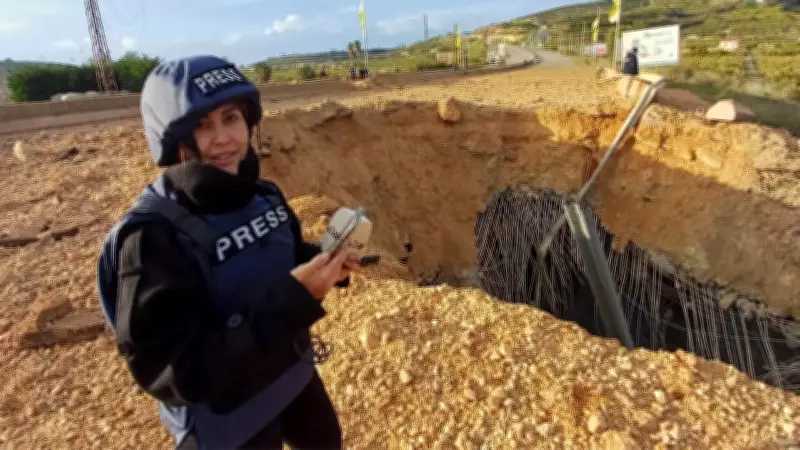
Lebanese Journalist Killed in Israeli Airstrike Amid Escalating Conflict
A Lebanese journalist, Amal Khalil, was tragically killed in an Israeli airstrike in southern Lebanon on Wednesday, as hostilities linked to the ongoing Israel–Hezbollah conflict continue to intensify. Rescue teams recovered her body hours after the attack, highlighting the severe risks faced by media workers in the region.
Details of the Attack and Rescue Efforts
The reporter, Amal Khalil of Al-Akhbar, had taken shelter in a house in the village of al-Tiri while covering the fighting. According to Lebanese authorities, the strike that hit the house occurred shortly after an earlier Israeli attack in the area. Officials from Lebanon’s health ministry stated that the initial strike killed two people. A second strike then targeted the building where Khalil and her colleague, Zeinab Faraj, had sought refuge. Faraj was critically injured and pulled from the rubble, but rescue teams were unable to reach Khalil immediately due to ongoing Israeli fire in the area, which forced emergency responders to suspend their operations.
Khalil remained trapped under debris for several hours before Lebanese army units, civil defence teams, and the Lebanese Red Cross were able to access the site. Her body was recovered late at night, more than six hours after the strike. Israel’s military said it was reviewing the incident, maintaining that individuals in the village had violated a ceasefire and posed a threat to its forces. It denied deliberately targeting journalists or obstructing rescue operations.

Condemnation and Broader Context
Lebanon’s information minister, Paul Morcos, condemned the killing, calling it a flagrant violation of international and humanitarian law. Khalil’s death comes just ahead of a second round of talks between Israeli and Lebanese officials in Washington aimed at extending a ceasefire that took effect last week. The conflict between Israel and Hezbollah, which reignited in early March amid wider regional tensions tied to the US-Israeli confrontation with Iran, has continued to escalate along the border.
Khalil was a veteran reporter from southern Lebanon who had covered conflicts in the region since 2006. Her recent reporting focused on Israeli demolitions in villages where troops have established positions inside Lebanese territory. Her killing brings the number of journalists killed in Lebanon this year to nine, according to media watchdogs cited by Associated Press. The broader conflict has left at least 2,300 people dead and displaced more than one million, according to Lebanese officials.
International Reactions and Press Freedom Concerns
International press freedom groups strongly condemned the incident. Reporters Without Borders had earlier urged pressure on Israel to allow safe access for rescuers, while the Committee to Protect Journalists said the apparent targeting of journalists and obstruction of rescue efforts could constitute a war crime. Lebanon’s President, Joseph Aoun, called for coordinated efforts involving the army, the Red Cross, and UN peacekeepers to secure access to the site.
This incident follows a series of deadly strikes on media workers in recent weeks. In late March, an Israeli airstrike killed three journalists in southern Lebanon, including Ali Shoeib of Al-Manar TV. Israel said he was affiliated with Hezbollah intelligence, an allegation it did not substantiate. The same strike also killed Fatima Ftouni and her brother Mohammed Ftouni, both working with Al-Mayadeen TV. Days earlier, another airstrike in Beirut killed Mohammed Sherri, along with his wife.
The escalating violence underscores the precarious situation for journalists and civilians in conflict zones, with calls for greater protection and accountability growing louder from global observers.






