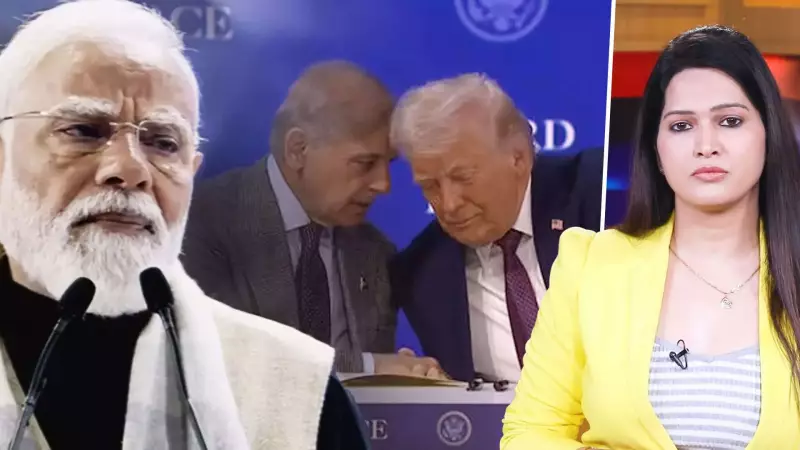
In a significant diplomatic development, India chose to abstain from participating in former US President Donald Trump's newly launched "Board of Peace" event at Davos, even after receiving a personal invitation. This decision came as Pakistan's Prime Minister Shahbaz Sharif actively joined the stage alongside Trump, highlighting contrasting approaches to international engagement between the two neighboring nations.
India's Strategic Absence Speaks Volumes
The much-publicized Davos moment, orchestrated by Donald Trump, was designed to generate global headlines with its select country participation and symbolic gestures. However, India's conspicuous empty chair conveyed a powerful message of diplomatic restraint. This absence reflects New Delhi's calculated approach to global diplomacy, where strategic silence often carries more weight than ceremonial presence.
Pakistan's Active Participation and Trump's Controversial Remarks
While India maintained its distance, Pakistan's Prime Minister Shahbaz Sharif stood prominently beside Trump during the event's proceedings. The former US president praised Pakistan's involvement, further emphasizing the geopolitical dynamics at play. More controversially, Trump once again referenced an India-Pakistan ceasefire claim that New Delhi has consistently refused to endorse or acknowledge, reigniting diplomatic tensions.

Credibility Questions Surround Peace Initiative
The participation list for the Board of Peace launch fell considerably short of earlier expectations, raising legitimate questions about the initiative's international credibility and future viability. Several anticipated nations joined India in their absence, suggesting broader skepticism about the forum's potential effectiveness in addressing complex global conflicts.
Diverging Diplomatic Philosophies
This event underscores the fundamentally different diplomatic philosophies guiding India and Pakistan's international engagements. While Pakistan actively seeks international platforms to enhance its visibility and diplomatic standing, India continues to prioritize substantive outcomes over symbolic optics. This approach becomes particularly significant within today's increasingly fragmented global order, where strategic patience often yields greater long-term dividends.
Broader Implications for India-US Relations
India's decision to skip the Trump-organized event, despite the personal invitation, signals New Delhi's commitment to an independent foreign policy that carefully evaluates each international engagement on its substantive merits. This calculated restraint demonstrates India's growing confidence in navigating complex global diplomacy while protecting its national interests and strategic autonomy.
The Board of Peace launch, intended as a showcase of international cooperation, instead revealed the intricate complexities of contemporary global diplomacy. India's absence and Pakistan's presence, combined with Trump's controversial ceasefire references, created a diplomatic tableau that speaks volumes about current international relations in South Asia and beyond.