

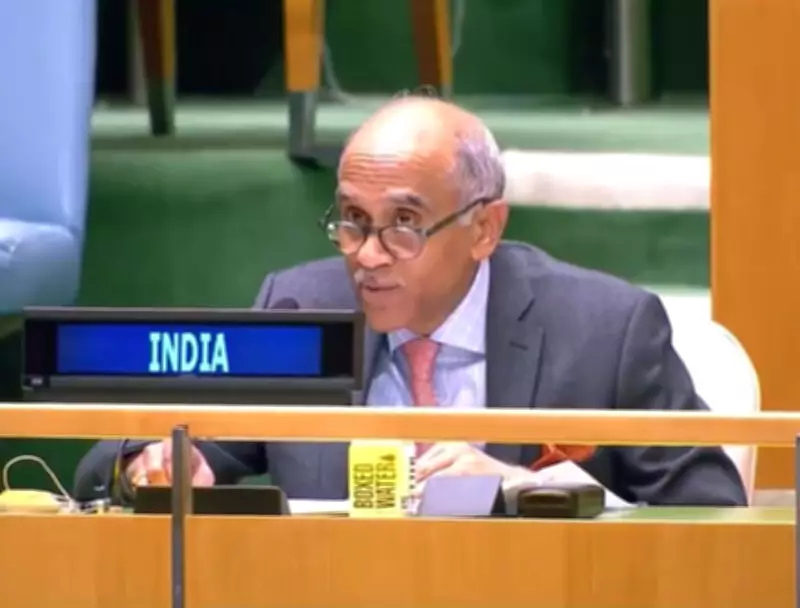
India Counters Pakistan at UN, Cites Terrorism to Defend Indus Treaty Suspension
In a robust diplomatic confrontation at the United Nations, India launched a sharp rebuttal against Pakistan, defending its decision to suspend the Indus Waters Treaty and accusing Islamabad of decades of aggression and terrorism. The exchange occurred during a UN event commemorating World Water Day, where India's Permanent Representative, Harish Parvathaneni, delivered a pointed right of reply.
Decades of Hostility and Terror Attacks
Ambassador Parvathaneni emphasized that India had initially entered into the 1960 Indus Waters Treaty with sincere intentions of goodwill and friendship. However, he stated that Pakistan's actions, including waging three wars and orchestrating thousands of terror attacks against India, have fundamentally violated the spirit of the agreement. "Tens of thousands of innocent Indians have fallen victim to Pakistan-sponsored terrorism," Parvathaneni declared, underscoring the severe human cost of cross-border violence.
He labeled Pakistan as the "global epicentre of terror" and argued that responsibility in water-sharing arrangements is a mutual obligation that cannot be separated from broader bilateral conduct. The envoy made it clear that India's patience has been exhausted after years of unaddressed hostilities, leading to the treaty's suspension.

Treaty No Longer Reflects Modern Realities
Parvathaneni further justified India's move by highlighting that the Indus Waters Treaty, signed over six decades ago, fails to account for contemporary challenges and advancements. He cited:
- Technological progress in dam infrastructure
- Growing demands for clean energy
- Significant climate and demographic changes
The Indian envoy noted that all efforts to discuss necessary modifications to the treaty with Pakistan were consistently rebuffed, leaving the agreement increasingly unviable in the face of evolving circumstances.
India's Stance and Domestic Achievements
Reiterating India's position as a responsible upper riparian state, Parvathaneni asserted that such responsibility must be reciprocated by Pakistan ending its use of terrorism as a state policy. "Pakistan must uphold the sanctity of human life before talking of upholding the sanctity of treaties," he stated firmly.
Amid the tense exchange, India also used the UN platform to showcase its domestic accomplishments in water governance. Parvathaneni highlighted the Jal Jeevan Mission, one of the world's largest rural drinking water programs, which emphasizes community participation and women-led management. This served to contrast India's proactive domestic efforts with Pakistan's alleged misuse of international forums to raise bilateral issues.
Conclusion: A Call for Credible Action
In conclusion, Ambassador Parvathaneni made it unequivocal that the Indus Waters Treaty will remain in abeyance until Pakistan "credibly and irrevocably ends its support for all forms of terrorism." This strong stance underscores India's firm resolve to link water-sharing cooperation with broader peace and security, setting a clear precedent for future diplomatic engagements between the two nations.






