

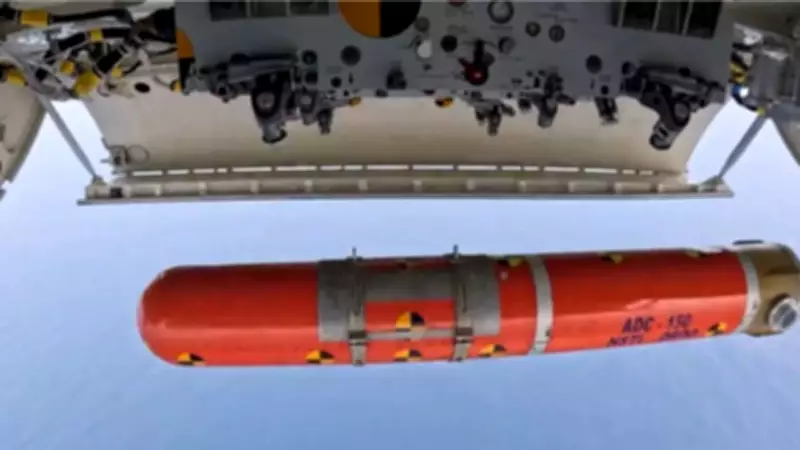
India's Indigenous ADC-150 Air Droppable Containers Pass Critical Trials
India has achieved a significant milestone in naval logistics with the successful completion of in-flight release trials for the indigenous air droppable container system, designated ADC-150. Conducted from a Boeing P-8I Poseidon aircraft, these trials mark a major advancement in the country's ability to deliver emergency supplies to naval vessels operating far from coastal areas.
Successful Trials Conducted Off Goa Coast
According to the Ministry of Defence, the Defence Research and Development Organisation (DRDO) and the Indian Navy carried out four successful in-flight release trials between February 21 and March 1, 2026. The tests were conducted off the coast of Goa under various extreme conditions to validate the system's reliability and performance.
The ADC-150 system is specifically designed to deliver payloads weighing up to 150 kilograms, including critical stores, spare equipment, and medical aid. This capability is crucial for naval ships that may encounter emergencies or require urgent supplies while deployed in open sea environments, often referred to as "blue sea" areas.

Enhancing Naval Operational Capabilities
The air droppable container system represents a substantial improvement in naval operational logistics. By enabling rapid response to vessels in distress, the ADC-150 allows ships to receive necessary supplies without interrupting their missions. This is particularly important when ships face machinery failures or equipment issues that require immediate spare parts to continue operations.
Officials emphasized that the system was developed to meet the Indian Navy's specific requirements for use with the P-8I aircraft, and it was designed and qualified within a remarkably short timeframe. With the developmental flight trials now completed successfully, the system is expected to be inducted into naval service soon.
Collaborative Development Effort
The development and testing of the ADC-150 system involved multiple DRDO laboratories across India:
- The Naval Science and Technological Laboratory in Visakhapatnam served as the nodal laboratory for the project.
- The Aerial Delivery Research and Development Establishment in Agra developed the specialized parachute system used for the container.
- The Centre for Military Airworthiness and Certification in Bengaluru provided essential flight clearance and certification.
- The Defence Research and Development Laboratory in Hyderabad supported the trials with advanced instrumentation.
This collaborative effort demonstrates India's growing self-reliance in defense technology and its commitment to enhancing maritime security through indigenous innovation.






