

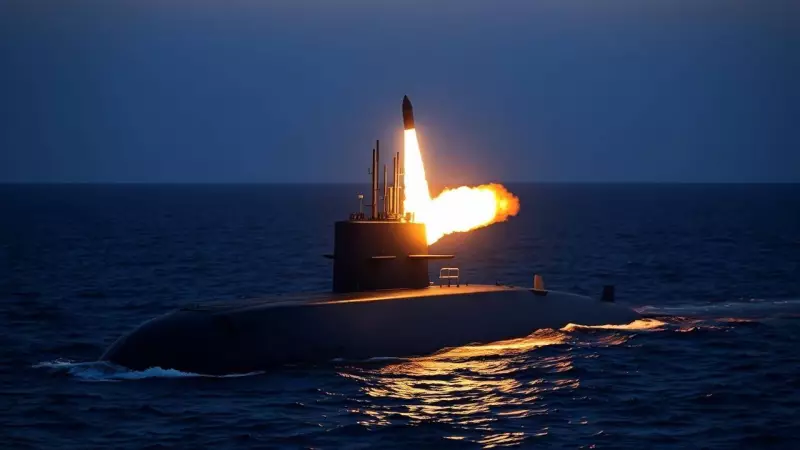
India conducted a significant test of its indigenous K-4 intermediate-range ballistic missile on Tuesday, launching it from the nuclear-powered submarine INS Arighaat in the Bay of Bengal. This test marks a crucial advancement in the country's strategic naval capabilities.
Details of the K-4 Missile Test
The missile was fired from the 6,000-tonne submarine off the coast of Visakhapatnam. While the defence ministry has not issued an official statement, sources confirmed the test involved the solid-fuelled K-4 missile. This weapon system is designed to strike targets as far as 3,500 kilometres away while carrying a substantial two-tonne nuclear payload.
This was not the first trial for the K-4, but it represents a key milestone as it was launched from an operational SSBN (Ship Submersible Ballistic Nuclear). A source indicated that a comprehensive analysis will determine if the test met all technical parameters and mission objectives. "It usually takes several tests for ballistic missiles, especially those launched from submarines, to achieve full operational status," the source noted.

Strengthening India's Nuclear Triad at Sea
The test is pivotal for strengthening the sea-based leg of India's nuclear weapons triad, which is considered the most survivable and credible component of its deterrence strategy. INS Arighaat, commissioned on August 29 last year, is India's second nuclear-powered ballistic missile submarine. Its predecessor, INS Arihant, which became fully operational in 2018, is limited to shorter-range K-15 missiles with a 750-km reach.
The K-4's eventual deployment will provide the Indian Navy with a much deeper strike capability from the sea, complementing the more robust land and air legs of the triad. The land-based arsenal is led by the Agni-5 missile (over 5,000 km range), while aircraft like the Rafale, Sukhoi-30MKI, and Mirage-2000 can deliver nuclear gravity bombs.
Future of India's SSBN Fleet
India's submarine program is on an ambitious expansion path. The third SSBN, INS Aridhaman, is scheduled for commissioning in the first quarter of 2026, followed by a fourth in 2027-28. These new submarines, built under the secretive Advanced Technology Vessel (ATV) programme, will be larger with a displacement of 7,000 tonnes each.
Looking further ahead, plans exist to construct even more powerful 13,500-tonne SSBNs equipped with 190 MW reactors, a significant upgrade from the 83 MW reactors on the first four boats. The operationalisation of the K-4 missile, and future missiles like the K-5 and K-6 with ranges between 5,000 to 6,000 km, will help India narrow the capability gap with other nuclear powers like the US, Russia, and China, which possess intercontinental ballistic missiles (ICBMs).
This progressive enhancement of the naval deterrent aligns with India's declared "no first-use" nuclear policy, ensuring a secure, survivable, and potent platform for a retaliatory strike, thereby solidifying the nation's strategic autonomy and security posture.






