

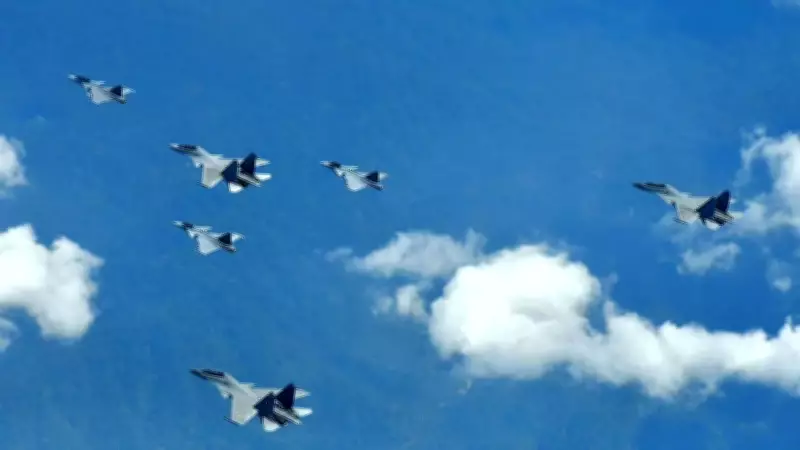
India and Thailand Launch Joint Air Force Exercise to Strengthen Military Synergy
The Indian Air Force (IAF) has initiated a collaborative in-situ air exercise with the Royal Thai Air Force (RTAF), marking a significant step in enhancing operational coordination and interoperability between the two nations' military forces. This joint drill is designed to bolster defence cooperation and foster regional security synergy, reflecting the deepening strategic partnership between India and Thailand.
Exercise Details and Participating Assets
In an official announcement on social media platform X, the IAF confirmed the commencement of the exercise, highlighting the participation of key frontline assets. The IAF is deploying its formidable Su-30MKI multirole fighter jets, Airborne Warning and Control System (AWACS) aircraft, Airborne Early Warning and Control (AEW&C) platforms, and IL-78 aerial refuelling tankers. On the Thai side, the RTAF is contributing its advanced Gripen aircraft, showcasing a mix of capabilities aimed at simulating real-world combat scenarios.
Su-30MKI: As the backbone of the IAF's combat fleet, the Su-30MKI is a twin-engine, air dominance fighter excelling in air superiority, deep strike, and maritime operations. Its thrust vectoring engines provide exceptional manoeuvrability, while advanced radar and electronic warfare systems enable network-centric operations, offering a critical offensive edge during joint drills.

AWACS: Serving as flying command centres, AWACS aircraft are equipped with long-range radar for 360-degree surveillance, capable of tracking multiple aerial targets simultaneously. They extend situational awareness beyond ground radar coverage and coordinate fighter aircraft in complex air operations, enhancing real-time battle management.
AEW&C: These platforms supplement larger AWACS systems by conducting tactical airspace monitoring, detecting hostile aircraft, and supporting coordinated responses. The indigenous AEW&C system boosts layered air defence capabilities and allows for rapid deployment in regional surveillance during exercises and contingencies.
IL-78 Refuelling Aircraft: The IL-78 tanker is a key force multiplier, extending the operational range and endurance of fighter jets through mid-air refuelling. This capability enables combat aircraft to undertake longer missions without returning to base, crucial for sustained operations in joint exercises.
Historical Context and Bilateral Relations
India and Thailand established diplomatic relations in 1947, celebrating their 75th anniversary of ties in 2022. Defence cooperation is guided by a Memorandum of Understanding signed on January 25, 2012, encompassing various engagements such as defence dialogues, joint maritime patrols, annual staff talks, exchange visits, training programmes, and participation in multilateral exercises.
The strategic alignment is further reinforced by Thailand's 'Act West' policy, which complements India's 'Act East' outreach, alongside shared maritime proximity. Bilateral ties extend beyond defence to include trade, connectivity, culture, education, and people-to-people exchanges, with an estimated 400,000 to 500,000 Indian-origin individuals in Thailand, including over 25,000 non-resident Indians, primarily in Bangkok.
Significance and Future Implications
This ongoing exercise underscores the expanding defence engagement between India and Thailand, aimed at strengthening regional security cooperation. By integrating advanced military assets and fostering interoperability, the drill not only enhances tactical capabilities but also signals a commitment to collaborative efforts in maintaining stability in the Asia-Pacific region. As both nations continue to build on their historical ties, such exercises are pivotal in addressing contemporary security challenges and promoting peace through robust defence partnerships.






