

India Seeks Clarity on Russian Oil Import Claims Following US Trade Framework Announcement
Amidst growing controversy surrounding White House assertions that India has consented to United States oversight of Russian petroleum imports, Union Commerce Minister Piyush Goyal stated on Saturday that the Ministry of External Affairs would provide definitive clarity regarding India's ongoing acquisition of Russian crude oil. The clarification comes following the announcement of an interim framework for a comprehensive trade deal between the United States and India.
White House Statement Sparks Political Debate
After revealing the preliminary structure for the bilateral trade agreement, the White House issued a statement claiming: “India has committed to stop directly or indirectly importing Russian Federation oil, has represented that it will purchase United States energy products from the United States, and has recently committed to a framework with the United States to expand defense cooperation over the next 10 years.”
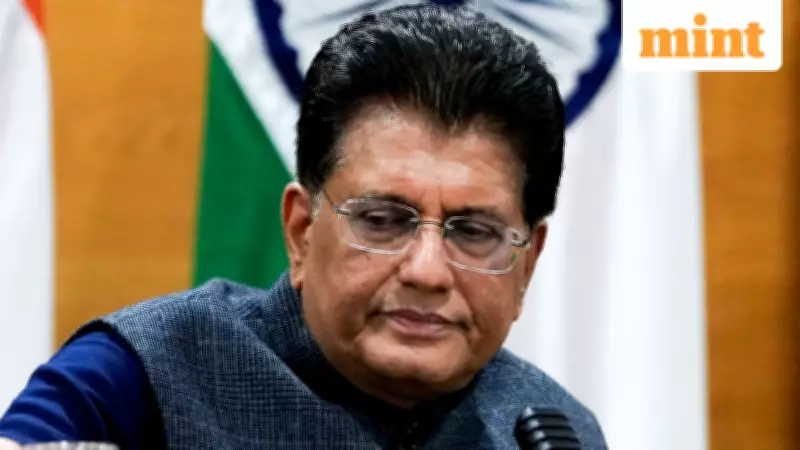
However, the Indian administration has not issued any formal verification or confirmation concerning any specific pledge to completely cease the procurement of oil from Russia. During a press conference held in New Delhi on Saturday, Commerce Minister Piyush Goyal responded to queries by stating: "MEA will give information about it."

Political Opposition Criticizes Government Position
The Congress party launched sharp criticism against the NDA government led by Prime Minister Narendra Modi on Saturday, alleging that the Union administration has accepted American surveillance of India's Russian oil imports as an integral component of the trade pact's preliminary framework.
In a detailed social media post on platform X, Congress General Secretary Jairam Ramesh declared: "The US will now monitor whether India is importing oil from Russia or not. If the US decides India has imported Russian oil directly or indirectly, the extra 25% tariff penalty is back. This is truly extraordinary. And the Modi government has accepted it!!"
Trade Framework Details and Tariff Adjustments
Washington and New Delhi jointly declared in an official collaborative communique that they have successfully established a comprehensive structure for a temporary agreement on bilateral, mutually advantageous commerce, referred to as the Interim Agreement, and have settled on the specific conditions and parameters.
According to the joint briefing released by both the Commerce Ministry and the White House, the United States shall implement a corresponding tariff adjustment of 18 percent on various Indian-made products. This tariff adjustment covers multiple sectors including:
- Textiles and garments
- Leather goods and footwear
- Polymers and organic chemicals
- Interior decor and hand-crafted items
- Specific industrial equipment and machinery
Pending the effective finalization and implementation of the Interim Agreement, the United States shall eliminate the reciprocal duties on an extensive list of commodities specified in the Potential Tariff Adjustments for Aligned Partners Annex. This includes critical sectors such as generic medicines, precious stones and jewelry, and advanced aerospace components.
Protections for Indian Farmers and Agricultural Sector
Simultaneously, Commerce Minister Piyush Goyal has promised complete and total safeguarding of Indian farmers within the established parameters of the new trade accord. He further emphasized that the comprehensive arrangement would yield significant advantages for agricultural cultivators and Indian micro, small, and medium enterprises across various sectors.
Goyal specifically highlighted: "Agricultural products from Indian farmers will be exported to the United States at zero duty. At the same time, no tariff concessions have been granted for agricultural products from US farmers entering the Indian market."
Regarding the opening of specific markets, the minister elaborated: "We have opened our markets for the United States on some products like Distiller's Dried Grains with Solubles, wines and spirits in which we have maintained a minimum import price as a protective measure."

The Commerce Minister added a crucial clarification regarding genetically modified products: "The agreement also makes it unequivocally clear that genetically modified food will not be allowed into India under any circumstances."
The developing situation highlights the complex diplomatic balancing act India maintains between its longstanding energy partnership with Russia and its deepening strategic and economic ties with the United States, particularly within the framework of new trade agreements and international partnerships.





