

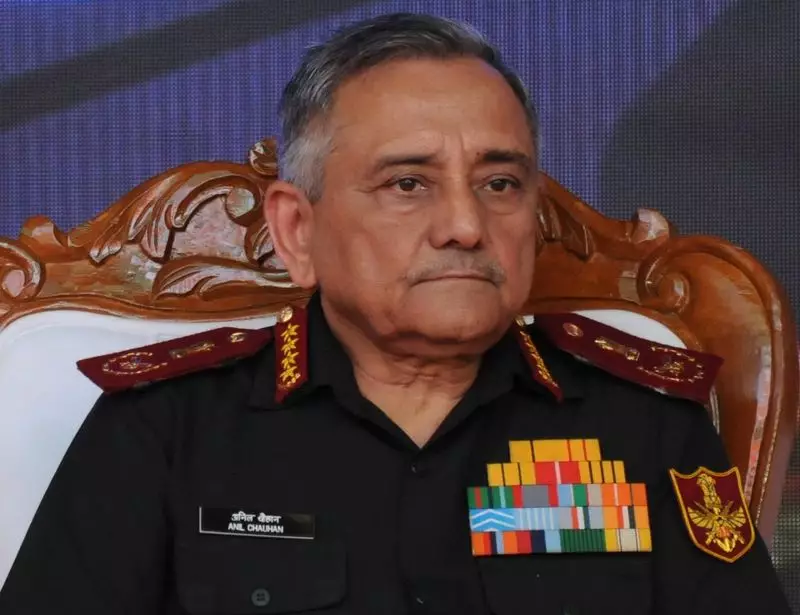
India's position in the rapidly evolving global landscape has been dramatically redefined by the country's top military commander, who has declared the nation the ultimate swing state in contemporary geopolitics. Chief of Defence Staff General Anil Chauhan has made a significant assertion that the future balance of global power will largely depend on which power centers India chooses to align with strategically.
India's Pivotal Role in Reshaping World Order
During his address at the 2024 Synergia Conclave, General Chauhan presented a compelling vision of India's emerging role on the world stage. He emphasized that we are currently witnessing a fundamental shift from a bipolar to a multipolar world order, a transition that creates unprecedented opportunities for nations like India to influence global outcomes.
The CDS elaborated that India's growing economic strength, demographic advantages, and strategic location position it uniquely to affect international power equations. General Anil Chauhan specifically noted that how India manages its relationships with major power centers will determine the character of the emerging global architecture.

The Strategic Imperative of Multi-Alignment
Rather than committing to any single alliance system, India has perfected the art of strategic autonomy through multi-alignment. General Chauhan highlighted how India skillfully participates in diverse groupings like the Quad, BRICS, and Shanghai Cooperation Organization while maintaining its independent foreign policy trajectory.
This approach allows India to leverage relationships across traditional geopolitical divides, engaging with Western powers while maintaining substantive partnerships with Russia and other Global South nations. The CDS pointed to India's ability to navigate the complex Russia-Ukraine conflict as evidence of its sophisticated diplomatic capabilities.
India's economic trajectory forms the bedrock of its geopolitical significance, with the country projected to become the world's third-largest economy in the coming years. This economic momentum, combined with military modernization and soft power influence, creates what General Chauhan described as unprecedented strategic leverage.
Implications for Global Power Centers
The recognition of India as the ultimate swing state carries profound implications for how major powers approach international relations. According to the CDS, this reality means that global power balance calculations must now incorporate India's alignment preferences as a critical variable.
General Chauhan's analysis suggests that neither the established Western-led order nor emerging alternative frameworks can achieve dominance without India's substantial participation or at least benevolent neutrality. This gives India what strategists might call structural power in shaping the rules and norms of the future international system.
The CDS also addressed the challenges of this pivotal position, noting that navigating competing expectations from different power centers requires sophisticated statecraft and clear-eyed assessment of national interests. India must balance its relationships while avoiding entrapment in others' conflicts or strategic rivalries.
Looking forward, General Chauhan's assessment positions India not merely as a regional power but as a genuinely global swing state whose choices will reverberate across continents and determine the character of the 21st-century world order. This represents both an extraordinary opportunity and significant responsibility for Indian foreign policy and strategic planning.






