

Resilience and Patience: India's Strategy in Navigating Trump's Tariff Storm
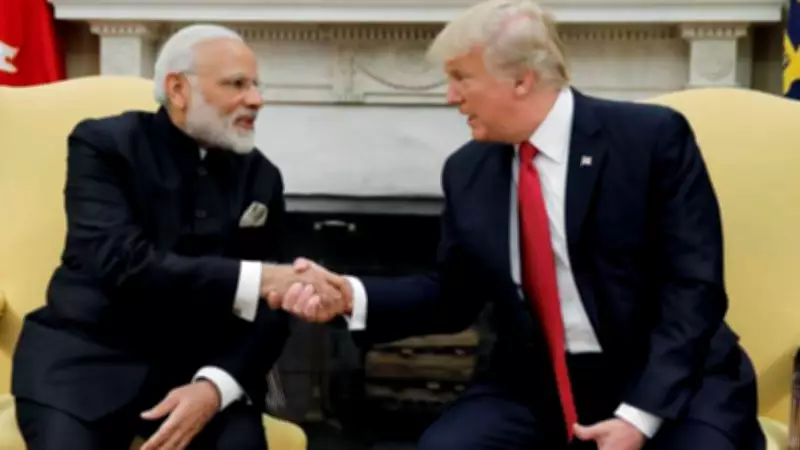
The recent finalisation of the India-US trade deal marks a significant milestone, bringing closure to a turbulent year in bilateral relations. This agreement paves the way for Delhi and Washington to refocus on the broader strategic agenda outlined by Prime Minister Narendra Modi and President Donald Trump during their White House meeting in February 2025. Both leaders emphasised the urgency of a swift trade deal and called for enhanced cooperation in defence industrialisation, critical technologies, and strategic coordination across the Indo-Pacific region.
The Path to Agreement: Quiet Engagement Over Confrontation
While President Trump adopted a tough and transactional approach over the past year, Prime Minister Modi demonstrated remarkable resilience, tempered by patience, in weathering the tariff storm. Delhi's strategy was neither one of capitulation nor escalation. Instead, it opted for quiet, persistent engagement, which ultimately proved effective in navigating the complexities of the negotiations. The trade deal, announced via social media by the two leaders, now requires formalisation, with several elements needing further refinement to achieve mutual satisfaction. Complex negotiations and imaginative diplomatic efforts lie ahead to place bilateral commercial ties on a high and sustainable growth trajectory.
The Structural Foundation of the India-US Partnership
The durability of the India-US partnership is rooted in its deep structural foundation. The convergence of strategic interests and the establishment of a dense architecture of cooperation over the last quarter-century have created a relationship resilient to personality clashes or serious differences on individual issues. This strategic ballast was crucial in weathering not only trade complications but also other challenges over the past year. Since Trump's return to the White House, commentators in both Delhi and Washington speculated that Pakistan and Russia might complicate India-US relations. However, neither could derail the dynamics of this robust partnership.

Regional Dynamics: Pakistan and Russia in Perspective
Pakistan, despite its utility for America, does not constitute a crucial pillar of US regional strategy. The economic gap between India and Pakistan has widened significantly, precluding any return to strategic parity in the American geopolitical imagination. The role of Sergio Gor, US Ambassador to India and special envoy for the Subcontinent and Central Asia, in concluding the trade deal suggests new possibilities for regional collaboration rather than a revival of old hyphenations. Similarly, Russia remains important for Delhi, but its weight in India's strategy has relatively declined over the decades. India's purchases of discounted Russian oil were driven by price and market considerations, making reductions as part of the trade deal a matter of pragmatism rather than principle. India's ties with Russia will remain relevant, but Delhi has no incentive to let them clash with its high-stakes engagement with the US.
The China Factor: A Key Variable for Both Nations
The most critical variable for both Washington and Delhi is China. Despite Trump's intermittent G2 rhetoric, the structural contradictions between the US and China remain profound and not easily overcome. Recent US National Security and Defence Strategies issued by the Trump Administration underscore the objective of preventing any single power from dominating the Indo-Pacific, aligning closely with India's quest for a multipolar Asia. Trump's tactical approach to Beijing, shaped by China's growing economic and military heft, differs from previous administrations. Delhi's own recalibration of ties with Beijing is similarly influenced by the reality of China's expanding power. Securing a stable Asia remains the cornerstone of the India-US partnership, with the challenge now being to add greater commercial, technological, and defence depth to this alliance.

Strategic Implications and Future Directions
Trump's emphasis on burden-sharing introduces another dimension to India-US convergence, pressing allies and partners to assume greater responsibility for regional stability. For India, this creates a larger strategic space and necessity to shape outcomes in South Asia and the Indian Ocean. Rather than oscillating between anxieties of American entrapment or abandonment, Delhi must focus on crafting a proactive regional strategy that leverages convergences with the US to strengthen India's national capacities and widen its regional footprint. The resolution of the trade dispute reinforces a broader truth: India's economic diplomacy is increasingly oriented toward the West. After decades of defensive trade policy, Delhi's priority is now to strengthen commercial integration with the complementary economies of the US and Europe, as well as with Anglo-Saxon nations like Australia, Britain, Canada, and New Zealand. This shift is rooted in the logic that India's economic prosperity and technological modernisation depend on closer ties with Western markets and capital.
With the tariff cloud lifting, India and the United States can return to advancing a partnership that will shape the balance of power in Asia and the wider world for decades to come. To achieve this, Delhi and Washington must quickly address the many loose ends of the trade deal, ensuring a solid foundation for future cooperation.





