

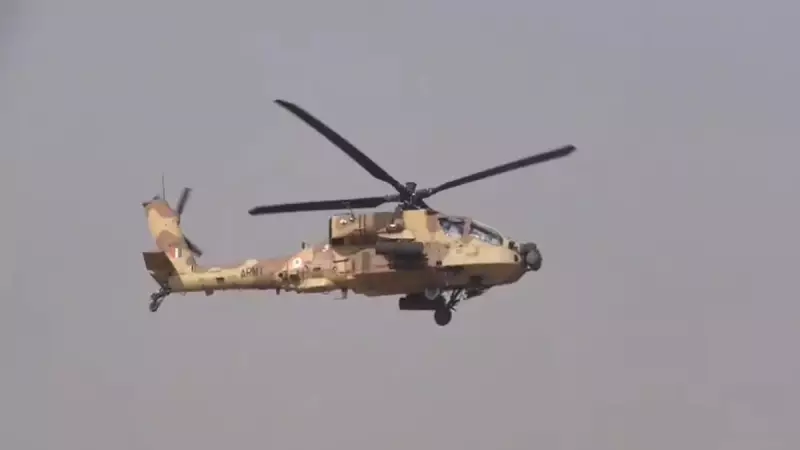
The Indian Army has achieved a significant milestone in its military modernization efforts with the completion of its dedicated fleet of advanced attack helicopters. The final batch of three cutting-edge AH-64E Apache Guardian attack helicopters arrived at the Hindon Air Force Station in Ghaziabad, Uttar Pradesh, on December 16, 2025. This delivery marks the fulfillment of a crucial contract and fully equips the army's aviation corps with one of the world's most formidable aerial combat platforms.
Delivery and Induction of the Final Apache Batch
The three helicopters, part of a direct commercial sale between the Government of India and US aerospace giant Boeing, were flown into the Hindon airbase. This arrival concludes the delivery of all six AH-64E Apache helicopters ordered specifically for the Indian Army. The first batch of three helicopters had been delivered earlier in the year. The induction process for these final machines will now begin in earnest, involving assembly, thorough testing, and integration into the army's existing operational framework.
This procurement is separate from the Indian Air Force's (IAF) fleet of 22 Apache Guardians, which were delivered earlier and are already operational. The army's Apaches are destined to provide dedicated, rapid, and lethal close air support for its ground formations, particularly in varied and challenging terrains along India's borders.

Capabilities of the AH-64E Apache Guardian
The AH-64E Apache, also known as the Apache Guardian, represents the latest and most advanced version of this iconic attack helicopter. Its integration into the Indian Army's arsenal brings a transformative capability to the battlefield. The helicopter is renowned for its:
- Network-Centric Warfare Ability: It can seamlessly share real-time battlefield data with other army and air force assets, including drones and fighter jets, creating a unified tactical picture.
- Advanced Weaponry: The helicopter is equipped with a 30-mm chain gun, Hellfire air-to-surface missiles, and Hydra 70 rocket pods, making it lethal against both armored vehicles and infantry.
- Enhanced Survivability: With improved digital connectivity, better engines, and advanced sensors, the AH-64E variant offers superior performance and pilot safety in high-threat environments.
These helicopters will dramatically enhance the army's ability to conduct precise strikes, provide close combat support, and dominate the mechanized battle space, especially in the plains and desert sectors.
Strategic Impact and Future of Army Aviation
The completion of the Apache fleet delivery is a cornerstone of the Indian Army's plan to build a potent and self-reliant aviation corps. For years, the army has sought its own fleet of attack helicopters to ensure immediate and integrated support for its advancing ground units, a role previously dependent on the Air Force. The arrival of these six Apaches fulfills that long-standing requirement.
The helicopters are expected to be based in the western sector, adding substantial firepower to India's armored strike formations. Their deployment will act as a major force multiplier, deterring adversaries and providing a decisive edge in any potential conflict. The focus will now shift to the operational training of pilots and ground crews, and the development of tailored tactics to maximize the potential of these machines in conjunction with other arms of the military.
This milestone also underscores the deepening defense partnership between India and the United States. The successful execution of this high-value contract through the Foreign Military Sales (FMS) route demonstrates growing trust and strategic alignment in defense technology transfer. The Indian Army, with its Apache fleet now complete, has taken a giant leap towards achieving its goal of integrated battle groups with organic, devastating aerial firepower.






