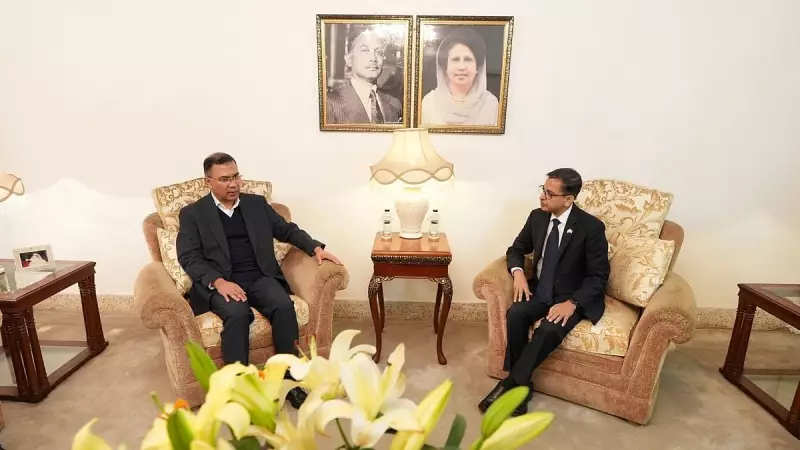
In a significant diplomatic development, India's High Commissioner to Bangladesh, Pranay Verma, held a meeting with Tarique Rahman, the Chairman of the Bangladesh Nationalist Party (BNP), in London. This engagement marks a notable interaction between a senior Indian diplomat and the leader of Bangladesh's principal opposition party, which is currently not in power.
A Meeting of Strategic Importance
The meeting took place on Wednesday, though the specific date was not disclosed in the official communication. The Indian High Commission in Dhaka confirmed the encounter, stating it was part of the envoy's "outreach with Bangladesh's political leadership." Tarique Rahman, who is the acting chairman of the BNP and the son of its founder, former President Ziaur Rahman, has been living in London for several years.
This interaction is particularly noteworthy as the BNP has been out of government for over a decade and has been critical of the current Awami League administration's foreign policy, including its ties with India. The meeting suggests a potential recalibration in India's diplomatic approach, aiming to maintain channels with all major political stakeholders in its crucial neighbour.

Context and Diplomatic Nuances
The engagement occurs against a complex political backdrop in Bangladesh. The BNP boycotted the last general election in January 2024, leaving the Awami League under Sheikh Hasina in a dominant position. India has historically shared a strong relationship with the Awami League, but this meeting indicates a broader, more inclusive diplomatic strategy.
Discussions during the meeting are believed to have covered the current political landscape in Bangladesh and the broader trajectory of India-Bangladesh relations. By initiating this dialogue, India appears to be acknowledging the multi-party dynamics within Bangladesh and securing its long-term interests by engaging with figures beyond the incumbent government.
Implications for Bilateral Ties
This outreach carries substantial implications. Firstly, it demonstrates India's intent to foster relationships across the political spectrum in Bangladesh, ensuring stability and continuity in bilateral relations regardless of which party is in power. Secondly, it provides a direct channel for communication with a major political force that commands significant public support in Bangladesh.
For the BNP and Tarique Rahman, the meeting represents a form of international recognition and an opportunity to present its viewpoints directly to a key regional power. The party has often expressed concerns about aspects of the bilateral relationship, and this dialogue offers a platform to address them.
The Indian High Commission's statement emphasized that such engagements are a regular part of diplomatic practice, aimed at understanding perspectives from all sides. This move is seen by analysts as a pragmatic step to safeguard India's strategic interests, which include security cooperation, connectivity projects, and managing cross-border issues, in a politically fluid environment.
In conclusion, High Commissioner Pranay Verma's meeting with Tarique Rahman is more than a routine diplomatic event. It is a strategic overture that underscores India's nuanced and forward-looking foreign policy towards Bangladesh. By keeping lines of communication open with the opposition, India aims to build a more resilient and comprehensive partnership with one of its most important neighbours in South Asia.