

Two Indian LPG Carriers Safely Navigate Strait of Hormuz, Head to India with Vital Cargo
In a significant development for India's energy security and maritime operations, two Indian-flagged liquefied petroleum gas (LPG) carriers have successfully transited the strategically crucial Strait of Hormuz. The vessels, identified as the Shivalik and Nanda Devi, are now en route to Indian ports, carrying approximately 92,700 metric tons of LPG, a critical fuel for domestic consumption.
Shipping Ministry Provides Detailed Update on Safe Passage
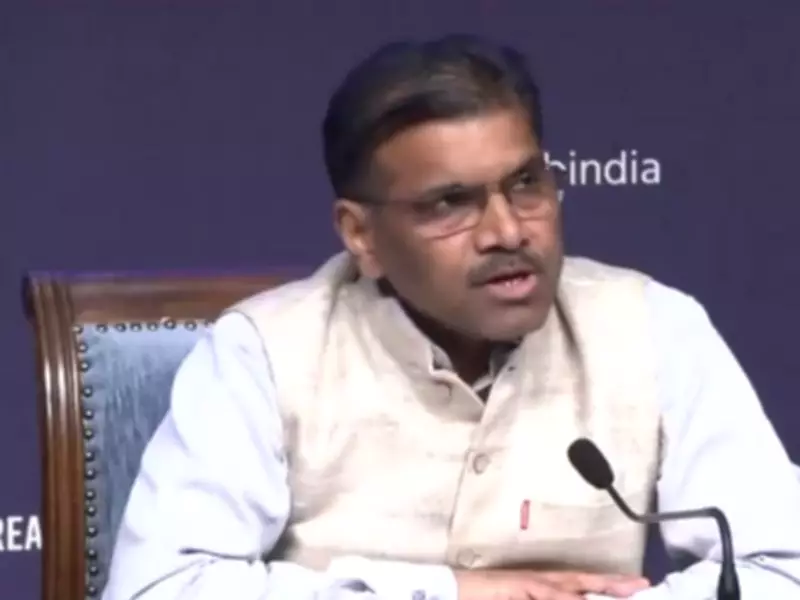
Rajesh Kumar Sinha, Special Secretary in the Shipping Ministry, provided a comprehensive update on Friday, confirming the safe transit of these vessels. The Shivalik and Nanda Devi navigated the Strait of Hormuz late Thursday night into early Friday morning, proceeding without incident toward their destinations in India.
"All Indian seafarers in the Persian Gulf region are safe, and no untoward incidents involving them have been reported over the last 24 hours," Sinha stated, offering reassurance amid ongoing regional tensions in West Asia.

Operational Details and Arrival Schedule
The ministry outlined specific operational details regarding the vessels and their cargo:
- Vessels: Shivalik and Nanda Devi, both Indian-flagged LPG carriers.
- Cargo: Approximately 92,700 metric tons of LPG.
- Ports of Arrival: Mundra and Kandla.
- Expected Arrival Dates: March 16 and March 17, respectively.
Sinha further noted that prior to this transit, there were 24 Indian-flagged vessels in the Persian Gulf, located to the west of the Strait of Hormuz. With the departure of Shivalik and Nanda Devi, 22 vessels remain in the region, carrying a total of 611 Indian seafarers. The ministry continues to monitor their status closely.
Enhanced Coordination and Communication Efforts
The Shipping Ministry, through the Directorate General of Shipping (DG Shipping), is actively coordinating with multiple stakeholders to ensure the safety of Indian crew members and vessels. This includes close collaboration with ship owners, Recognized Private Security Network (RPSN) agencies, and Indian diplomatic missions in the area.
"Over the past 24 hours, DG Com—the communication centre of DG Shipping—received 312 phone calls and 460 emails from seafarers, their family members, and other maritime stakeholders. All communications have been addressed appropriately," Sinha reported.
Highlighting the sustained efforts, he added that over the last 15 days, the centre has handled more than 2,500 phone calls and approximately 5,000 emails, each receiving a timely response to alleviate concerns and provide updates.
Iranian Assurance on Safe Passage for Indian Vessels
In a related diplomatic assurance, Abdul Majid Hakeem Ilahi, the representative of Iran's Supreme Leader in India, reiterated on Saturday that Indian vessels would be permitted safe passage through the Strait of Hormuz. This statement comes amid the broader conflict in West Asia, which has raised global concerns over maritime security in the region.
Speaking in an interview with ANI, Ilahi responded affirmatively when asked if Indian ships would be allowed to transit the strait, saying, "Of course, of course. Yes." He elaborated that the Iranian embassy had facilitated opportunities for some Indian ships to cross the strait, acknowledging India's energy needs and the solidarity expressed by the Indian people.
"We informed our people in Iran of the sympathy and solidarity of our brothers and sisters in India. And we said that now also they are suffering from a shortage of gas and a shortage of petrol, and we have to provide for them and help them and support them," Ilahi added, emphasizing Tehran's awareness of India's critical energy requirements.

Global Significance of the Strait of Hormuz
The Strait of Hormuz is a narrow maritime chokepoint separating the Iranian coast from Oman, serving as a vital conduit for global energy supplies. More than 20 million barrels of crude oil pass through this channel daily, accounting for roughly one-fifth of global oil consumption and nearly a quarter of all seaborne oil trade. Additionally, a significant portion of the world's liquefied natural gas (LNG) traverses this passage.
Any disruption in the flow through the Strait of Hormuz can have cascading effects on financial markets, supply chains, and household budgets worldwide, underscoring the importance of safe and uninterrupted transit for vessels like the Indian LPG carriers. The successful passage of Shivalik and Nanda Devi thus represents a positive step in maintaining stability in this critical maritime route.





