

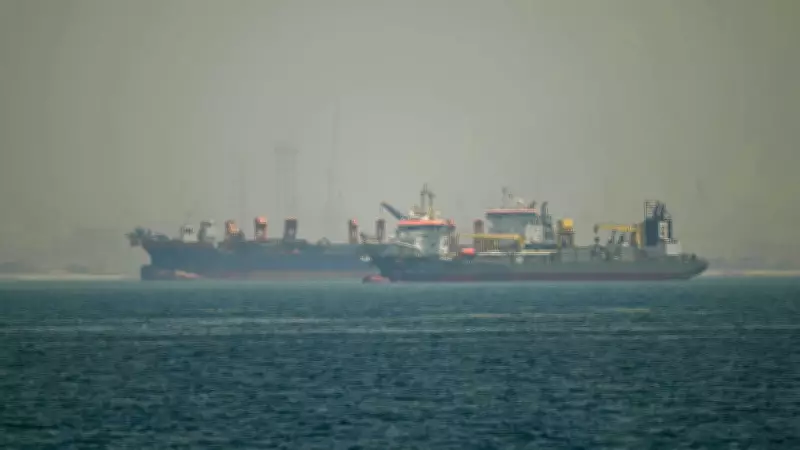
Indian Navy Prioritizes Security for Stranded Vessels After Iranian Firing Incident
Following the firing incident on two Indian vessels by Iran's Islamic Revolutionary Guard Corps (IRGC) on April 18, the Indian Navy is now prioritizing security for all Indian ships stranded and waiting to cross the strategically vital Strait of Hormuz. Defense sources have confirmed this heightened security posture to media outlets, emphasizing the critical nature of the situation in one of the world's most important maritime chokepoints.
Heightened Security Measures and Strategic Avoidance
All Indian-flagged cargo ships operating in the Persian Gulf have been specifically instructed to stay clear of Larak Island and to transit only when directed by naval authorities to ensure their maximum safety. This directive comes as a direct response to the recent hostilities and the fortified nature of the Iranian-controlled territory.
Larak Island, also known as Lark Island, represents a critical strategic, military, and logistical hub for Iran's extensive oil infrastructure within the Strait of Hormuz. The island functions as a key oil export terminal and sophisticated monitoring center for Iranian forces. It is heavily guarded and controlled exclusively by the IRGC, which has transformed it into a formidable bastion.

The island is fortified with an extensive network of bunkers, advanced radar systems, and comprehensive electronic warfare capabilities designed to monitor all passing maritime traffic. Furthermore, Larak hosts military bases capable of deploying fast-attack craft armed with potent anti-ship missiles, posing a significant and immediate threat to commercial cargo ships navigating near the Hormuz chokepoint.
Substantial Naval Deployment and Ongoing Operation
Currently, India has deployed approximately half a dozen warships near the Strait of Hormuz and the Gulf of Oman. Their primary mission is to protect and escort India-bound cargo vessels through this volatile region. This substantial warship deployment is an integral part of the continuing Operation Sankalp, a long-standing naval initiative aimed specifically at safeguarding India-bound energy tankers and ensuring the security of the nation's maritime trade routes.
Satellite imagery analysis from Vortexa reveals the scale of the current disruption. A significant number of India-bound vessels are currently stuck within the region. This includes eight crude oil tankers carrying a combined total of 13.13 million barrels of Gulf crude, three tankers transporting 115,600 tonnes of LPG (liquefied petroleum gas), and four tankers with a total of 297,000 tonnes of LNG (liquefied natural gas), along with several other chemical tankers. The Indian Navy remains in constant communication with these cargo vessels and has advised them to move only after receiving explicit clearance, according to official sources.
Diplomatic Engagement and Incident Details
The Ministry of External Affairs has stated that India is actively engaged in diplomatic talks with Iran and other relevant nations to ensure the safe and unimpeded passage of its ships through the Strait of Hormuz. The Iranian side has provided assurances that Indian concerns are being conveyed to the highest authorities in Tehran, with diplomatic channels remaining open and active.
The incident that triggered this heightened alert occurred on Saturday, April 18. The VLCC supertanker Sanmar Herald, loaded with 2 million barrels of Iraqi crude oil from Al Basrah Anchorage, and the bulk carrier Jag Arnav were fired upon by Iran's Sepah (IRGC) Navy near the southern approaches to the Strait of Hormuz, just south of Larak Island. Following the attack, both vessels executed a U-turn and headed back westward into the relative safety of the Persian Gulf. Authorities have confirmed that despite the firing, no injuries were reported among the Indian crew members aboard the ships.

Successful Transits and Ongoing Escorts
In a positive development, a government official reported that ten Indian vessels have successfully and safely crossed the Strait of Hormuz amidst these tensions. The last tanker to make the crossing was the Desh Garima, which navigated the strait on April 18. This was the same day the Jag Arnav and Sanmar Herald were forced to turn back after being fired upon.
After its successful transit, the Desh Garima is now under the protective escort of the Indian Navy in the Arabian Sea. The vessel is currently en route and is expected to arrive at its destination in Mumbai on April 22, marking a successful conclusion to a perilous segment of its journey under naval protection.





