

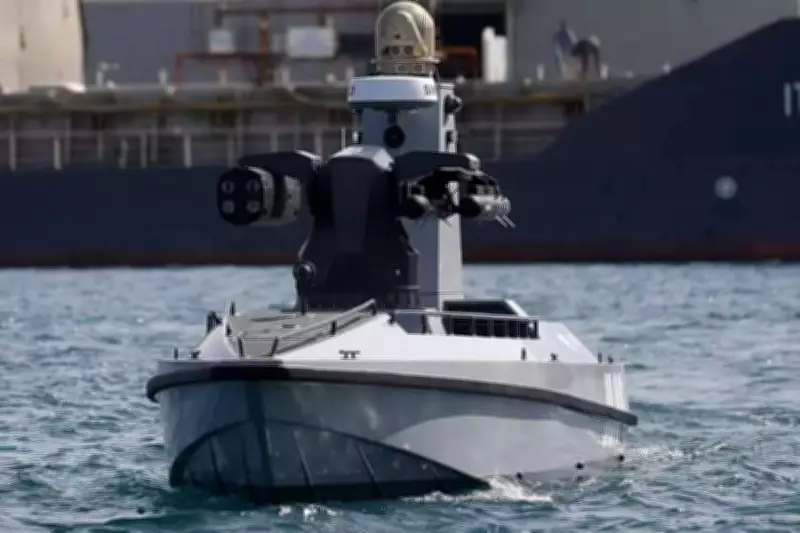
Indian Navy Inducts First Indigenous Autonomous Weaponised Unmanned Fast Interceptor Crafts
The Indian Navy has achieved a significant milestone in maritime defence with the delivery of the first batch of the country's pioneering autonomous weaponised unmanned fast interceptor crafts (FICs). This development comes from Pune-based defence company Sagar Defence Engineering, marking a crucial step toward enhancing India's naval capabilities and securing its maritime boundaries.
Boosting Coastal Security and Special Missions
These unmanned weaponised crafts are set to provide a substantial boost to the Navy's special missions along the Indian coastline. With the induction of these advanced vessels, India joins an elite group of nations possessing the technology to develop weaponised swarm capability, allowing multiple vessels to operate cohesively under centralized control.
The first batch, consisting of two FICs, was dispatched from Sagar Defence's Pune facility on Friday for deployment along the west coast. This delivery follows a contract signed on January 5, 2022, where the Navy placed orders for twelve such weaponised boat swarms.

A Testament to Indigenous Defence Innovation
Designed, developed, and manufactured entirely within India, these fast interceptor crafts stand as a powerful testament to the nation's vision of self-reliance in defence technologies under the iDEX–DIO framework. This achievement represents a strategic shift from previous dependence on Israel-made unmanned surface vessels, which were limited primarily to mine counter-measure operations.
Advanced Combat Capabilities and Operational Features
The unmanned interceptor craft comes equipped with formidable combat capabilities:
- A 12.7 mm gun for close-range firepower
- Capability to deploy short-range missiles and loitering ammunition
- Advanced navigation systems allowing operation in GPS-denied environments
- Endurance exceeding two days at sea for sustained operational presence
- Operational range of over 400 nautical miles (approximately 800 kilometers)
One of the most remarkable features is the craft's ability to function reliably even under electronic warfare conditions, ensuring mission continuity where conventional platforms might falter. Multiple fast interceptor crafts can be controlled from a single station, significantly multiplying force projection while minimizing risk to human operators.
Versatile Operational Flexibility
Despite its unmanned design, the craft maintains impressive operational flexibility. It can carry over fourteen personnel when required for special missions, making it suitable for various roles including:
- Coastal operations
- Rapid insertion missions
- Evacuation operations
- Extended patrols
- Rapid response scenarios
This layered weapon architecture enables the craft to respond decisively to a wide spectrum of threats, ranging from asymmetric maritime challenges to high-intensity combat situations.
Strategic Significance and Global Positioning
This technological advancement aligns perfectly with emerging global trends in network-centric and autonomous warfare. By developing and deploying these indigenous unmanned weaponised crafts, India positions itself firmly at the forefront of naval innovation, enhancing both maritime domain awareness and coastal security capabilities.
The induction of these autonomous weaponised unmanned fast interceptor crafts represents not just a technological achievement but a strategic enhancement of India's maritime defence posture, contributing significantly to the nation's security infrastructure along its extensive coastline.






