

Indian Navy Engages in US-Led Sea Dragon 2026 Multinational Exercise in Guam
The Indian Navy has officially joined Exercise Sea Dragon 2026, a significant US-led multinational anti-submarine warfare (ASW) drill currently underway at Andersen Air Force Base in Guam, located in the strategic Indo-Pacific region. This participation underscores India's growing role in regional maritime security and cooperation with allied forces.
Strategic Timing and Significance
While Exercise Sea Dragon is an annual event, its occurrence in 2026 holds particular importance due to the backdrop of a widening conflict in West Asia. This context amplifies the exercise's role in fostering stability and preparedness among participating nations, highlighting the need for enhanced military coordination in volatile times.
Exercise Details and Participants
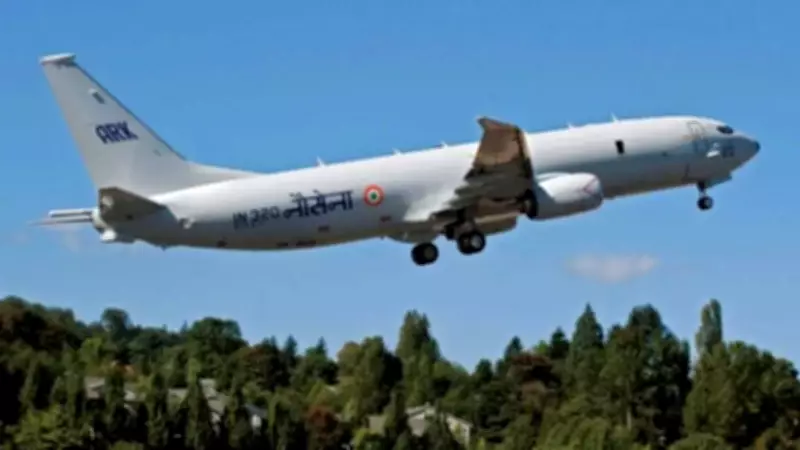
The two-week-long exercise involves complex training scenarios designed to track and respond to both simulated and live submarine targets. Key aircraft deployed include the P-8A Poseidon and P-8I, with the Indian Navy contributing one Boeing P8I maritime patrol and reconnaissance aircraft. Alongside India, the exercise features participation from the Royal Australian Air Force, Japan Maritime Self-Defense Force, and Royal New Zealand Air Force, collectively aiming to strengthen allied maritime cooperation and boost anti-submarine warfare capabilities across the Indo-Pacific.

Objectives and Statements from Officials
Lt Christian Castro, public affairs officer for Commander Task Force 72 of the US Navy, emphasized that the exercise seeks to advance aircrew proficiency in anti-submarine warfare by progressing from tracking simulated targets to detecting and tracking live submarines. This hands-on approach is crucial for real-world operational readiness.
An official statement from the Australian Ministry of Defence confirmed the deployment of a P-8A Poseidon aircraft along with 50 aviators. Aviators from the recently reformed 12 Squadron of the Royal Australian Air Force (RAAF) will engage in a range of challenging scenarios to test their abilities in detection, tracking, and response in demanding environments.
Importance of Cross-National Coordination
RAAF detachment commander Squadron Leader Bryce Martin described the exercise as critical for maintaining an operational edge. He noted that the extensive training area allows crews to refine coordination across national boundaries, a capability that has gained renewed importance as allied navies recalibrate their strategies in the Western Pacific. This collaboration is vital for addressing evolving security challenges and ensuring maritime dominance in the region.
Overall, Exercise Sea Dragon 2026 serves as a pivotal platform for enhancing interoperability and readiness among allied forces, with the Indian Navy's involvement marking a key step in bolstering Indo-Pacific security frameworks.






