

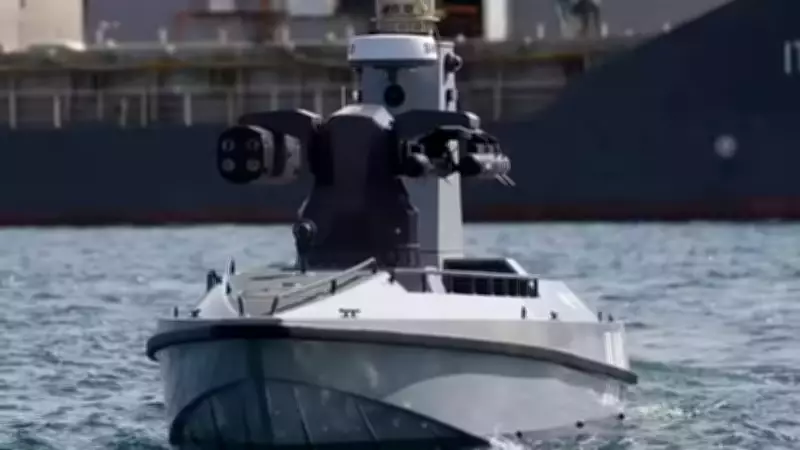
NEW DELHI: In a landmark development for India's maritime security, the Indian Navy is poised to induct its inaugural batch of autonomous weaponised unmanned fast interceptor crafts (FICs). This strategic move represents a substantial leap forward in modernising the nation's coastal defence architecture, enhancing surveillance and response capabilities along its extensive coastline.
A Major Step Towards Modernisation
These cutting-edge vessels, meticulously developed by Pune-based Sagar Defence Engineering, signify India's entry into an exclusive global consortium of nations proficient in deploying advanced weaponised swarm vessel technology. The induction underscores a pivotal shift towards indigenous innovation in defence, aligning seamlessly with the government's ambitious self-reliance initiatives.
Indigenous Development and Deployment
Designed, developed, and manufactured entirely within India under the innovative iDEX–DIO framework, these unmanned interceptor crafts are engineered to fortify maritime surveillance, facilitate rapid response operations, and execute special missions with precision. The Navy has proactively placed orders for 12 such vessels, with the first two already dispatched for strategic deployment along the western coast, marking a transition from previous reliance on Israel-made unmanned surface vessels primarily used for mine counter-measure roles.

Key Features of the Unmanned Fast Interceptor Crafts
1. Fully Autonomous Operation
The interceptor craft operates without an onboard crew, leveraging sophisticated autonomous systems for navigation, targeting, and mission execution, thereby reducing human error and enhancing operational efficiency.
2. Indigenous 'Made in India' Platform
These crafts are entirely designed and manufactured in India by Sagar Defence Engineering, epitomising the nation's push towards self-reliance in critical defence technologies and reducing dependency on foreign imports.
3. Swarm Warfare Capability
Multiple interceptor crafts can function as a coordinated "swarm," controlled from a single command station. This capability allows the Navy to deploy amplified firepower with minimal manpower, revolutionising tactical naval operations.
4. Heavy Close-Range Firepower
Each craft is equipped with a formidable 12.7 mm gun, enabling effective engagement of close-range maritime threats and ensuring robust defensive measures in hostile environments.
5. Missile and Loitering Ammunition Capability
Beyond the mounted gun, the vessels are adept at deploying short-range missiles and loitering ammunition, offering versatile combat solutions and adaptability in diverse operational scenarios.
6. Operates in GPS-Denied Environments
A standout feature is its resilience in GPS-denied or jammed environments. Advanced navigation systems ensure reliable functionality under electronic warfare conditions, guaranteeing mission continuity where conventional platforms might falter.
7. Long Endurance at Sea
With an operational endurance exceeding two days at sea, these crafts provide sustained maritime presence and continuous surveillance, crucial for monitoring vast coastal areas.
8. Extended Operational Range
Boasting a range of over 400 nautical miles (approximately 800 km), the vessels are capable of long-distance patrols and rapid response missions far from their base, extending the Navy's operational reach.
9. Manned Capability When Required
Despite being primarily unmanned, the crafts can accommodate up to 14 personnel if necessary, offering flexibility for special operations, coastal insertions, or evacuation missions, thus enhancing tactical versatility.
10. Reduced Risk to Human Operators
By replacing manned patrol boats in high-risk zones, these crafts significantly mitigate dangers to naval personnel while simultaneously enhancing force projection and operational safety.

Strategic Implications and Future Prospects
The induction of these autonomous weaponised unmanned fast interceptor crafts marks a transformative phase in India's naval defence strategy. It not only strengthens coastal security but also positions India as a formidable player in global maritime technology. As the Navy integrates these advanced systems, the focus remains on bolstering indigenous capabilities, fostering innovation, and ensuring robust defence preparedness in an increasingly complex maritime domain.





