

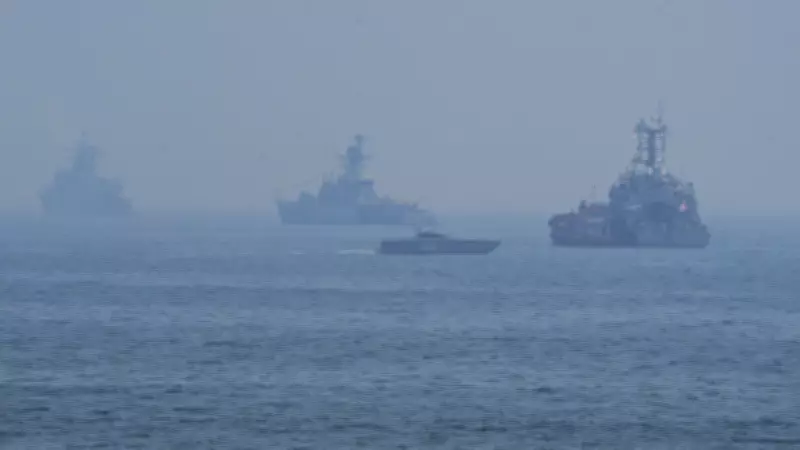
Indian Navy Intensifies Surveillance in Gulf to Protect Maritime Interests
In a strategic move to ensure the security of India's maritime assets, the Indian Navy has deployed warships in the Gulf region as part of the ongoing Operation Sankalp. These vessels are maintaining a constant vigil on India-bound cargo ships navigating the critical Strait of Hormuz area, a vital chokepoint for global oil and trade routes.
Close Monitoring and Successful Escorts Amid Regional Tensions
According to sources confirmed to TOI, a warship stationed off the Oman coast is actively monitoring the situation and keeping a close watch on cargo vessels destined for India. This deployment comes against a backdrop of heightened regional tensions, including conflicts involving Iran and Israel, which have raised concerns about maritime safety.
Under the protective umbrella of the Indian Navy, two Indian-flagged LPG tankers, Shivalik and Nanda Devi, both belonging to the Shipping Corporation of India (SCI), have successfully crossed the Strait of Hormuz and are now en route to India. Additionally, another Indian-flagged oil tanker, Jag Prakash, which is transporting gasoline from Oman to Africa, has safely set sail from east of the Strait of Hormuz.

Government sources, as per an agency report, have revealed that the Shivalik is being escorted by the Indian Navy, highlighting the proactive measures taken to safeguard national interests. This vigilance is crucial given the increased risks in the wider Gulf region, where approximately 23,000 Indian seafarers are employed on various vessels, including merchant ships and offshore installations, with 24 vessels currently near the Strait of Hormuz.
Operation Sankalp: A Long-Standing Maritime Security Initiative
Operation Sankalp was initiated by the Indian Navy on June 19, 2019, with the primary objective of ensuring the safe passage of Indian flag vessels through the Strait of Hormuz. This maritime security operation is conducted in close coordination with multiple stakeholders, including the ministries of defence, external affairs, shipping, petroleum and natural gas, and the Directorate General of Shipping.
Since its inception, the Navy has deployed a total of 23 warships in rotation to the Gulf of Oman and the Persian Gulf. Some of these warships remain actively deployed in the Gulf region, underscoring the ongoing commitment to maritime security. The naval deployment is particularly significant in light of recent escalations, such as Iran's threats following US actions and broader regional conflicts.
Diplomatic Developments and International Engagements
In a positive diplomatic development, Iranian ambassador to India Mohammad Fathali indicated on Friday that India could soon secure safe passage for its vessels through the Strait of Hormuz. This statement suggests potential cooperation amid the tense geopolitical landscape.
Meanwhile, the Indian Naval Sail Training Ship INS Sudarshini has achieved a significant milestone by arriving at the historic port of Valletta, Malta, on March 12. This visit marks an important leg of the ship's ambitious transoceanic expedition, Lokayan-26, which aims to cover 22,000 nautical miles globally. The arrival in Valletta underscores the deep-rooted maritime ties between India and Malta, following successful transits through the Suez Canal and a port call at Alexandria. INS Sudarshini commenced its voyage from Kochi on January 20 and is currently in the second month of this landmark journey.
The Indian Navy's efforts in the Gulf region, combined with international engagements like the INS Sudarshini's expedition, demonstrate a comprehensive approach to safeguarding maritime interests and fostering global partnerships. As tensions persist, the vigilance under Operation Sankalp remains a critical component of India's national security strategy.






