

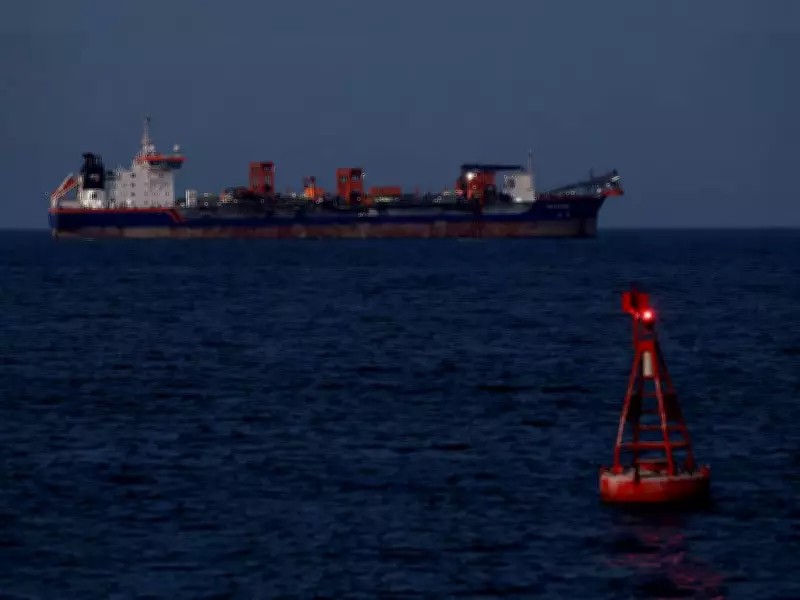
Indian Navy Warships on High Alert in Persian Gulf Region
In a strategic move to bolster maritime security, the Indian Navy has deployed several warships near the Persian Gulf, where they remain on standby to provide critical assistance to merchant vessels heading towards India. This deployment, confirmed by official sources on Sunday, underscores India's proactive stance in safeguarding its maritime interests amid ongoing regional instability.
Enhanced Naval Presence for Merchant Vessel Support
According to reliable sources, these Indian Navy warships are poised to offer any necessary help or support required by merchant ships navigating the volatile waters of the Persian Gulf. This initiative comes in response to heightened tensions in West Asia, which have raised concerns over the safety of commercial shipping lanes vital for global trade.
Recent developments highlight the urgency of this naval deployment. On Saturday, Iranian authorities granted transit permission through the Strait of Hormuz to two Indian-flagged vessels carrying liquefied petroleum gas (LPG). One of these vessels, identified as the Shivalik, was last reported in the Gulf of Oman and is anticipated to reach its destination by March 21, as per data from vessel traffic monitoring sites.

Government Measures for Seafarer and Vessel Safety
The Union Ports, Shipping and Waterways Ministry has been actively monitoring the situation, providing regular updates on the maritime environment in the Persian Gulf region. As per the ministry's latest assessment, there are currently 24 Indian-flagged vessels operating in the Persian Gulf, with 668 Indian seafarers on board. Additionally, 76 Indian seafarers remain stationed on three vessels located east of the Strait of Hormuz.
To ensure comprehensive oversight, the Directorate General of Shipping (DG Shipping) has intensified its coordination efforts with ship owners, Recognized Port State Control (RPSL) agencies, and Indian diplomatic missions. Since the activation of a 24-hour control room, DG Shipping has managed over 2,425 calls and 4,441 emails, facilitating the safe repatriation of more than 223 stranded Indian seafarers.
Iran's Assurance of Safe Passage for Indian Vessels
In a significant diplomatic gesture, Iran's Ambassador to India, Mohammad Fathali, has confirmed that Tehran will guarantee safe passage for vessels bound for India through the Strait of Hormuz. This commitment is rooted in the longstanding friendship and shared interests between the two nations. Ambassador Fathali emphasized, "Yes. Because India and Iran are friends. We have common interests; we have a common fate." He further elaborated on the mutual responsibility, stating, "Suffering of the people of India is our suffering and vice versa. And for this reason, the government of India helps us, and we should help the government of India because we have a common fate and common interest."
Echoing this sentiment, Abdul Majid Hakeem Ilahi, Representative of Iran's Supreme Leader in India, clarified that Iran has no intention of blocking the Strait of Hormuz. He noted that while the strait remains open, ships are facing challenges due to the prevailing situation in West Asia. Ilahi urged world leaders to exert pressure on US President Donald Trump to halt the conflict against Iran, highlighting the global impact of rising oil prices on populations worldwide.
Broader Implications for Maritime Security and Trade
The deployment of Indian Navy warships and Iran's assurances reflect a concerted effort to mitigate risks in one of the world's most critical maritime chokepoints. The Strait of Hormuz is a vital route for global energy trade, and any disruption could have far-reaching economic consequences. India's proactive measures, combined with diplomatic engagements, aim to ensure the uninterrupted flow of commerce and the safety of Indian nationals at sea.
As tensions persist in the region, the Indian Navy's standby presence serves as a deterrent against potential threats, reinforcing India's commitment to maritime security and its role as a responsible stakeholder in international waters. This development is closely watched by global observers, given its implications for regional stability and international trade dynamics.






