

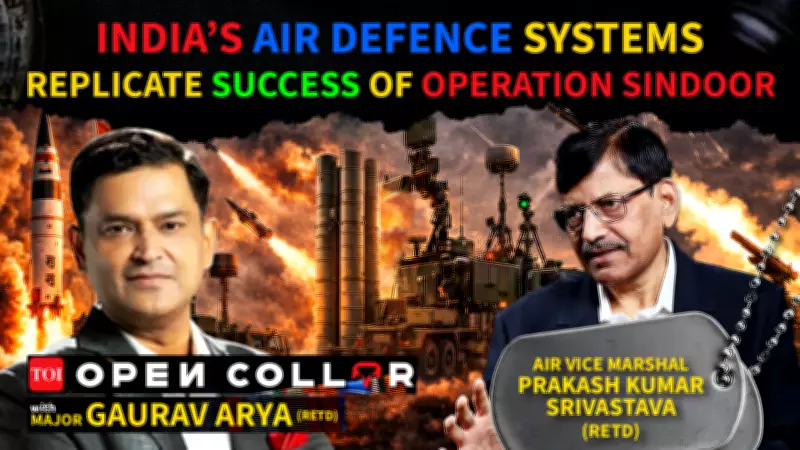
India's Air Defence Systems: Replicating Operation Sindoor's Success?
In a detailed discussion on the latest episode of OPEN COLLAR, Major Gaurav Arya was joined by Air Vice Marshal P.K. Srivastava (Retd.) to explain how India's air defence system protects the nation's skies. The conversation delved into the strategic capabilities that safeguard Indian airspace from various threats.
Comprehensive Air Defence Capabilities
The episode provided a thorough breakdown of India's multi-layered air defence architecture. From the advanced S-400 missile systems to the indigenous Akash missiles, the discussion highlighted how these systems work in tandem to create a formidable defensive shield. The experts explained the technical specifications and operational readiness of these critical assets.
AI-driven radar networks emerged as a crucial component of modern air defence. These sophisticated systems utilize artificial intelligence to detect, track, and classify potential threats with unprecedented accuracy. The integration of AI allows for faster response times and more efficient resource allocation during potential conflict scenarios.

Threat Interception Capabilities
The discussion specifically addressed how India's air defence systems can intercept various types of threats:
- Fighter jets: Advanced missile systems capable of engaging multiple aircraft simultaneously
- Ballistic missiles: Multi-layered defence systems designed to intercept incoming missiles at different altitudes
- Drone swarms: Specialized counter-drone technologies and electronic warfare capabilities
These capabilities represent significant advancements in India's defensive posture, providing comprehensive protection against diverse aerial threats.
Future Technologies and Indigenous Development
The episode also explored emerging technologies that will shape the future of air defence. Laser weapons and advanced missile defence systems were highlighted as key areas of development. These technologies promise to revolutionize air defence by providing more precise, cost-effective, and rapid response capabilities.
Particular emphasis was placed on India's growing strength in indigenous defence systems. The discussion noted how domestic research and development efforts are contributing to self-reliance in critical defence technologies. This indigenous capability development represents a strategic shift toward greater autonomy in national security matters.
Strategic Implications and Modern Warfare
The conversation contextualized these developments within the broader framework of modern warfare. The experts analyzed how advanced air defence systems contribute to deterrence and strategic stability in the region. The discussion also touched upon how these capabilities might replicate or build upon past successes in Indian defence operations.
The episode concluded by emphasizing the importance of continuous technological advancement and strategic planning in maintaining air superiority. As threats evolve, so must defensive capabilities, and India appears committed to staying at the forefront of air defence innovation.






