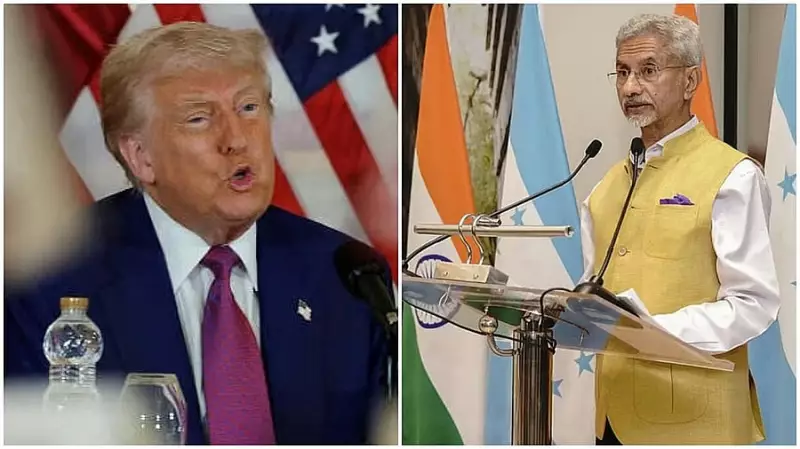
India, currently holding the rotating chairmanship of the BRICS grouping, has articulated its position on the recent political and economic turmoil in Venezuela. In a nuanced diplomatic move, New Delhi voiced serious concerns regarding the situation in the Latin American nation but deliberately avoided directly condemning the actions of the United States, which has imposed fresh sanctions on Caracas.
India's Diplomatic Statement: A Study in Nuance
The Indian statement, issued from the Ministry of External Affairs, reflects a carefully calibrated approach. It emphasized the need for a peaceful dialogue between all parties involved in Venezuela to find a resolution that respects the nation's sovereignty and constitutional framework. Officials underscored India's consistent position of non-interference in the internal affairs of other countries and its belief in resolving disputes through diplomatic and legal means.
This stance becomes particularly significant against the backdrop of recent US measures. The United States government, in a move to pressure the administration of President Nicolás Maduro, reinstated comprehensive sanctions on Venezuela's oil and gas sector. These sanctions had been temporarily lifted last year following an electoral roadmap agreement between the Maduro government and the opposition, which has since broken down.

The BRICS Context and India's Leadership Role
India's position was articulated in its capacity as the chair of BRICS, the influential bloc comprising Brazil, Russia, India, China, and South Africa. The grouping has historically positioned itself as a voice for the Global South, often advocating for a multipolar world order and critiquing unilateral actions by Western powers. However, member states within BRICS themselves have divergent views on issues like Venezuela, making a unified, strong condemnation challenging.
By expressing concern while stopping short of condemnation, India navigates a complex diplomatic tightrope. It maintains its traditional principle of strategic autonomy, avoids a direct confrontation with a major partner like the United States, and yet signals solidarity with the broader principle of respecting national sovereignty—a key concern for many developing nations. Analysts view this as India asserting its role as a consensus-builder within the bloc, rather than a confrontational leader.
Implications for Global Diplomacy and Energy Security
The situation has direct implications beyond diplomacy. Venezuela sits on the world's largest proven oil reserves, and any major disruption in its production or exports affects global energy markets. India, a major importer of crude oil, has significant energy interests at stake. A volatile Venezuela and escalating sanctions contribute to global oil price instability, which impacts the Indian economy.
Furthermore, India's approach highlights the evolving dynamics within multilateral forums. It demonstrates how emerging powers are crafting foreign policy statements that reflect their national interests and complex bilateral relationships, rather than adhering to rigid ideological blocs. The response is seen as pragmatic, aiming to preserve diplomatic channels with all sides while advocating for stability and dialogue.
In conclusion, India's statement as BRICS chair on Venezuela is a testament to its mature and nuanced foreign policy. It successfully balances core principles with pragmatic geopolitics, focusing on de-escalation and dialogue without alienating key global partners. This balanced stance is likely to define India's approach to other international crises as it continues to seek a larger role on the world stage.