

India Ramps Up Diplomatic Engagement with Iran to Restore Shipping in Strait of Hormuz
In a strategic move to address the escalating crisis in the Middle East, India is intensifying its diplomatic outreach to Iran with the goal of reopening the vital Strait of Hormuz for shipping. This approach positions dialogue with Tehran as a viable alternative to the military strategies advocated by US President Donald Trump, who has called for international naval deployments to force open the waterway.
Diplomatic Successes Amid Rising Tensions
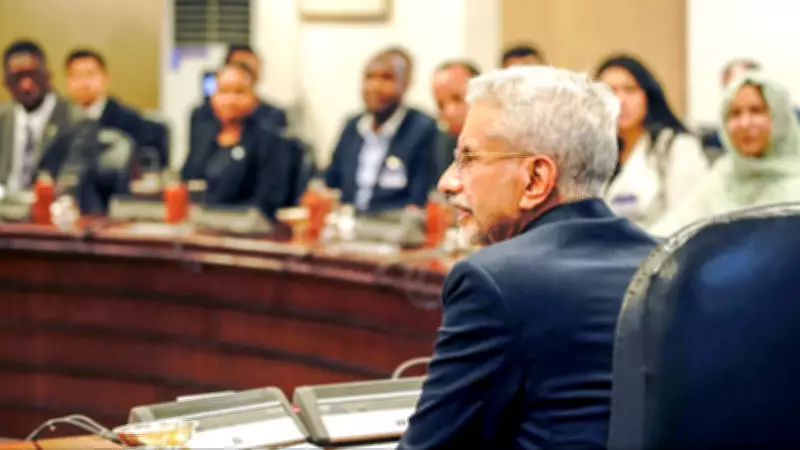
External Affairs Minister Subrahmanyam Jaishankar has highlighted that India's direct talks with Iranian authorities have already yielded tangible results. Over the weekend, two Indian-flagged gas tankers were permitted to pass through the strategic corridor, a breakthrough achieved through a series of high-level conversations between New Delhi and Tehran. Jaishankar emphasized in an interview with the Financial Times, "I am at the moment engaged in talking to them and my talking has yielded some results," underscoring India's commitment to continuing diplomatic efforts as long as they remain effective.
The urgency for India is particularly acute, given its heavy reliance on energy imports. The nation imports nearly 90% of its crude oil and stands as the world's second-largest importer of liquefied petroleum gas. With global energy markets growing volatile due to Iran's closure of the strait—a passage that normally handles roughly one-fifth of global oil and gas shipments—India faces significant economic pressure from rising prices and disrupted supply chains.

A Delicate Balancing Act in Global Diplomacy
India's diplomatic push involves a careful balancing act, maintaining engagement with Tehran to safeguard its energy security while preserving its strategic partnership with the United States. Washington remains India's largest export market, and the two countries are currently negotiating a trade deal, even as the US has recently eased pressure on New Delhi over purchases of Russian oil. Jaishankar noted, "From India's perspective, it is better that we reason, co-ordinate and get a solution," suggesting that diplomacy could help ease tensions and restore maritime traffic.
Iran's foreign minister, Abbas Araghchi, has indicated Tehran's openness to discussions with countries seeking safe passage for their vessels, an opportunity India has swiftly leveraged. However, Jaishankar clarified that there is no blanket deal covering all Indian ships; each transit is negotiated individually. "Every ship movement is an individual happening," he said, noting that many Indian vessels remain in the region and discussions are ongoing.
Multilateral Challenges and Strategic Hedging
The crisis is also testing India's diplomacy in multilateral forums such as BRICS, which India chairs this year and includes Iran among its members. Tehran has pushed the group to condemn US and Israeli strikes, but reaching consensus may prove difficult as the expanded bloc also includes Gulf states like Saudi Arabia and the UAE. Analysts, such as Nitin Pai of the Takshashila Institution, observe that India's engagement reflects an effort to hedge between competing geopolitical alignments, indicating that the diplomacy is working to navigate complex international dynamics.
India's outreach has included multiple conversations between Jaishankar and his Iranian counterpart, as well as a phone call between Prime Minister Narendra Modi and Iran President Masoud Pezeshkian. For now, India appears focused on keeping channels open with all sides, using its ties with Tehran to keep energy supplies moving while avoiding deeper entanglement in the widening conflict. This diplomatic strategy underscores India's role as a key player in global efforts to stabilize the region and protect economic interests amid ongoing tensions.






