

India's Hormuz Dilemma: A Critical Test of Strategic Autonomy
India faces a profound strategic challenge as Iran's blockade of the Strait of Hormuz threatens the nation's energy security and economic stability. This maritime chokepoint, described by the Indian Navy as the "jugular vein of global energy," has become the focal point of a geopolitical crisis with far-reaching implications for New Delhi's foreign policy.
The Energy Lifeline Under Threat
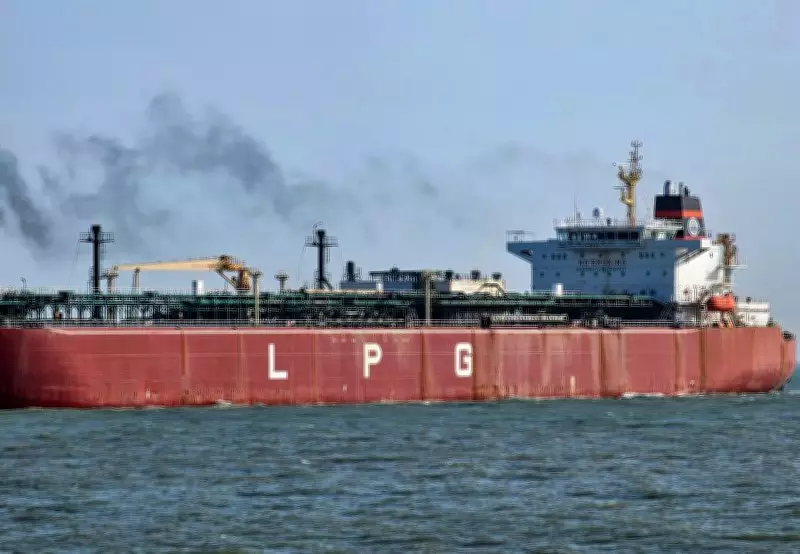
The Strait of Hormuz serves as the vital conduit linking the Persian Gulf to the Arabian Sea, through which approximately 20% of the world's oil passes daily. For India, this narrow waterway represents an economic lifeline, with the country's 23 oil refineries requiring over 5 million barrels of crude oil every single day. This translates to the arrival of 2-3 very large crude carriers at India's west coast ports daily to maintain industrial operations and economic growth.
Beyond petroleum, India's energy infrastructure depends equally on liquefied natural gas shipments, with at least one LNG carrier needing to reach regasification terminals daily to sustain the national gas grid. The potential disruption of these energy flows would trigger cascading effects across multiple sectors, including fertilizers and pharmaceuticals, creating both economic hardship for citizens and industrial paralysis.

Iran's Calculated Strategy
Iran's blockade represents a deliberate response to what it perceives as unprovoked aggression from the US-Israel alliance, which has targeted Iranian leadership, nuclear facilities, and missile infrastructure through air campaigns. Under the newly appointed Supreme Leader Ayatollah Ali Mojtaba Khamenei, Tehran has adopted a "war of survival" strategy that weaponizes the 30-kilometer-wide Strait of Hormuz to achieve two primary objectives.
First, by deploying sea mines and low-cost drones that threaten oil tankers, Iran has successfully driven maritime insurance premiums and freight rates to unprecedented levels, effectively paralyzing commercial shipping traffic through the region.
Second, by positioning missile batteries and "swarms" of aerial and seaborne drones along the strait's northern shoreline, Iran has created what military analysts describe as a "kill box" that has deterred even the powerful US Navy from intervening directly.
India's Precarious Position
Tehran's decision to grant only conditional approval to Indian-flagged tankers, requiring "case-by-case" diplomatic clearances for each transit through Hormuz, represents a calculated reminder of India's geographical and strategic vulnerabilities. While India maintains its status as a "major defense partner" of the United States, its physical proximity to the Persian Gulf and dependence on Middle Eastern energy creates what experts now term the "Hormuz dilemma."
This emerging situation transcends mere economic concerns, evolving into a severe test of India's much-vaunted "strategic autonomy"—the principle of maintaining independent foreign policy decisions without alignment to any particular power bloc. The transactional nature of Iran's diplomacy forces New Delhi to navigate complex geopolitical waters where energy security, international alliances, and regional stability intersect.
Beyond Simple Alignment Theories
While some observers attribute India's predicament to its growing alignment with Israel through initiatives like the Abraham Accords, I2U2 economic partnership (dubbed the "West Asian Quad"), and the India-Middle East-Europe Corridor (IMEC), this analysis overlooks India's broader strategic compulsions.
Two fundamental factors shape India's international relationships:

- The geopolitical reality of a hostile neighborhood, combined with limitations in domestic military-industrial capabilities, necessitates access to advanced military hardware and sophisticated weapons technology from international partners.
- The significant economic-technological-military asymmetry vis-à-vis an increasingly assertive China requires India to seek strategic hedges and partnerships within the Indo-Pacific region.
However, Indian policymakers must recognize certain realities in these international engagements. The sheer scale of India's defense requirements makes the nation an exceptionally lucrative customer for arms-producing countries, with Indian contracts often rescuing struggling manufacturers and amortizing research and development costs. Furthermore, every strategic partnership represents a mutually beneficial arrangement where partners gain as much from engaging with the world's most populous nation as India gains from the relationship.
The Path Forward: From Autonomy to Leadership
The current global landscape, marked by the Gaza conflict, Persian Gulf tensions, and shifting civilizational rhetoric, signals the erosion of the post-World War II rules-based international order. This environment validates Samuel Huntington's "Clash of Civilizations" thesis while widening divisions between Western powers and the Global South.
In this context, India possesses unique potential to transform its strategic autonomy from a defensive posture into proactive global leadership. By engaging all sides in international disputes and leveraging its historical non-alignment credentials, India can position itself as a bridge across deepening global divides.
Key initiatives could include:
- Spearheading energy diplomacy efforts to stabilize global supply chains
- Leading maritime security cooperation in critical waterways
- Advancing climate justice initiatives that address Global South concerns
- Promoting technological self-reliance through increased investment in research and development
Prime Minister Narendra Modi's emphasis on Atmanirbharta (self-reliance) must evolve beyond political slogan into substantive policy, with significant resources allocated to science, technology, and genuine innovation. Only through technological independence and strategic clarity can India navigate the Hormuz dilemma while emerging as a stabilizing force in an increasingly fractured world order.





