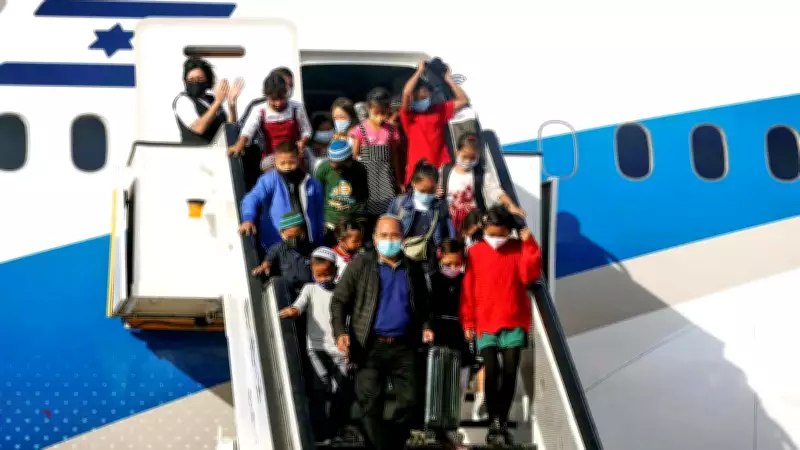
India's 'Lost Tribe' Prepares for Historic Exodus to Israel After Official Approval
After more than two decades of patient waiting and spiritual yearning, a significant chapter is about to unfold for a unique community in India's northeastern states. Following Israel's official nod, the approximately 6,000-member Bnei Menashe community is now making final preparations to leave India and embark on their sacred journey to the Holy Land.
A Leader's Lifelong Dream Nears Fulfillment
At the heart of this momentous migration is W L Hangshing, a 68-year-old retired Indian Revenue Service officer and a respected Kuki-Zo leader from Manipur. For over twenty years, Hangshing has carried a profound, unwavering dream not of material success, but of spiritual return. He now stands on the cusp of realizing his long-held aspiration to "make aliyah" — a powerful Hebrew phrase meaning "to go up," which signifies the sacred act of migration to Israel.
Hangshing's personal journey is a powerful symbol of his entire community's collective longing. He is one of the 5,800 officially recognized members of the Bnei Menashe in India. This community is primarily spread across the states of Manipur and Mizoram and forms a distinct part of the larger Kuki-Zo ethnic group.

Identity Rooted in Ancient History
The core of the Bnei Menashe's identity and their desire to migrate lies in a deep-seated historical and religious belief. The community firmly identifies itself as the direct descendants of the Bnei Menashe — one of the Ten Lost Tribes of Israel. According to their tradition, their ancestors were exiled from the ancient Kingdom of Israel over 2,700 years ago by the Assyrian empire, eventually finding their way to the remote hills of Northeast India.
For generations, they have preserved Jewish rituals, observed Sabbath, and maintained dietary laws, fostering a strong connection to Judaism despite their geographical isolation. This enduring faith has fueled their decades-long campaign for recognition and the right to return.
The Path to Recognition and Migration
The process leading to this imminent exodus has been long and complex. Key steps include:
- Formal Recognition: Over the years, Israeli rabbinic authorities have conducted investigations and conversions for many community members, formally recognizing their Jewish status.
- Government Approval: The recent official approval from the Israeli government marks the critical administrative green light needed for their large-scale migration.
- Community Preparation: Leaders like Hangshing have been instrumental in organizing the community, ensuring members meet religious and bureaucratic requirements for the move.
This migration, or aliyah, represents the culmination of a spiritual homecoming that has been a central pillar of the Bnei Menashe identity for centuries. As they prepare to leave their homes in India, they are stepping toward what they see as their biblical and historical homeland, closing a circle of exile that began millennia ago.