

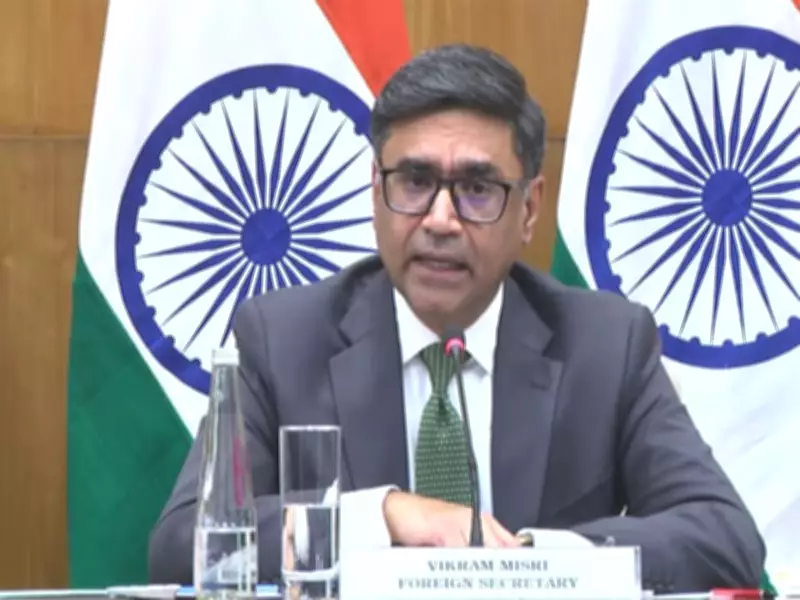
India's Foreign Secretary Reiterates National Interest as Core Principle in Energy Sourcing
In a significant statement, Foreign Secretary Vikram Misri has underscored that national interest remains the paramount guiding factor in India's energy sourcing decisions. This declaration comes amid recent claims from the United States regarding India's energy policies, highlighting the country's commitment to strategic autonomy in securing vital resources.
Strategic Autonomy in Global Energy Markets
Misri emphasized that India's approach to energy sourcing is carefully calibrated to ensure energy security, economic stability, and sustainable development. He noted that as one of the world's largest energy consumers, India must navigate complex global dynamics while prioritizing its domestic needs and long-term goals.
The Foreign Secretary's remarks address concerns raised by US officials about India's energy partnerships, particularly with nations under international scrutiny. Misri clarified that India engages with all countries based on mutual benefit and adherence to international norms, without compromising its sovereign interests.

Balancing Diplomacy and Domestic Imperatives
India's energy strategy involves a multifaceted approach:
- Diversifying energy sources to reduce dependency on any single region or supplier.
- Investing in renewable energy to align with global climate commitments and enhance sustainability.
- Strengthening diplomatic ties with energy-rich nations to secure stable and affordable supplies.
Misri pointed out that India's decisions are informed by a thorough assessment of geopolitical risks, market fluctuations, and technological advancements. This ensures that the country can meet its growing energy demands while fostering economic growth and social welfare.
Response to International Scrutiny
The Foreign Secretary's statement serves as a diplomatic response to the US claims, reaffirming India's right to pursue energy security in line with its national priorities. He highlighted that India's policies are transparent and consistent with its international obligations, including those related to climate change and energy transition.
Misri also acknowledged the importance of collaboration with global partners, including the United States, in advancing shared energy goals. However, he stressed that such cooperation must respect India's sovereign choices and developmental requirements.
This stance reflects India's broader foreign policy principle of strategic autonomy, which allows it to engage with multiple powers without aligning exclusively with any one bloc. In the context of energy sourcing, this means leveraging partnerships to enhance security while avoiding external pressures that could undermine national interests.
Implications for Future Energy Policies
Looking ahead, Misri indicated that India will continue to refine its energy sourcing strategies to adapt to evolving global challenges. Key focus areas include:
- Enhancing domestic production of conventional and renewable energy to boost self-reliance.
- Expanding international collaborations in energy technology and infrastructure development.
- Promoting energy efficiency across sectors to optimize resource utilization.
By prioritizing national interest, India aims to build a resilient energy ecosystem that supports its ambitious economic and environmental targets. Misri's remarks reinforce the government's commitment to a pragmatic and principled approach in this critical domain.






