

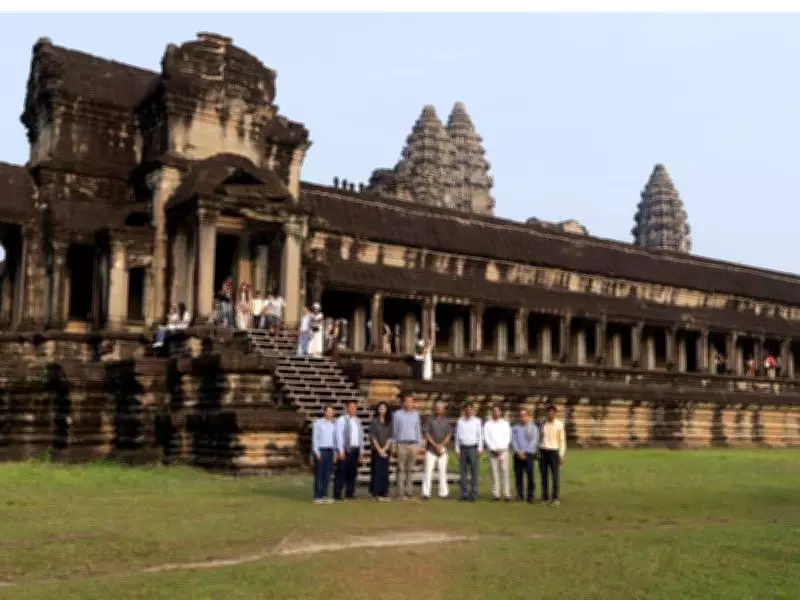
MEA Secretary P Kumaran Explores Angkor Wat, Reinforcing India-Cambodia Civilisational Bonds
During an official trip to Siem Reap, Cambodia, Secretary (East) in the Ministry of External Affairs (MEA), P Kumaran, made a significant visit to the Angkor Wat Temple. This ancient complex, recognized as the world's largest temple, stands as a powerful symbol of the deep-rooted civilisational heritage shared between India and Cambodia.
Highlighting Historical and Cultural Links
The visit, as detailed in a post by MEA spokesperson Randhir Jaiswal on social media platform X, emphasized the enduring people-to-people and cultural connections that have flourished between the two nations for decades. Kumaran's presence at Angkor Wat served to acknowledge India's pivotal role in the preservation of this UNESCO World Heritage Site, which vividly illustrates the historical and cultural exchanges linking the Indian subcontinent with Southeast Asia.
From 1986 to 1993, India was the first country to extend support for the restoration of Angkor Wat, responding to a request from the Cambodian government. This initiative came after years of civil strife and the devastating Khmer Rouge period, which had led to the deterioration of many temple structures. The Archaeological Survey of India (ASI) undertook the complex task of stabilizing and conserving key sections, helping to revive one of Cambodia's most iconic sites.

Angkor Wat's Rich Heritage and Indian Influence
Originally constructed in the 12th century by Khmer emperor Suryavarman II as a Hindu temple, Angkor Wat later evolved into a major Buddhist complex. It remains one of the most important archaeological sites in Southeast Asia. The temple's architecture, featuring soaring towers and intricate bas-reliefs, reflects strong influences from Indian religious and artistic traditions. These include narratives drawn from Hindu epics and Sanskrit inscriptions, highlighting millennia-old cultural exchange.
The restoration work has been widely appreciated by Cambodian authorities and citizens, reinforcing goodwill between India and Cambodia. Beyond Angkor Wat, India's collaboration has extended to other heritage projects in the region, such as conservation efforts at the Ta Prohm temple and Preah Vihear. These initiatives further cement cultural diplomacy under India's Act East Policy.
Strengthening Bilateral Ties Through Heritage
Kumaran's visit to Angkor Wat comes amid high-level bilateral engagements in Siem Reap, reflecting a continued commitment from both nations to strengthen ties through cultural preservation, tourism, and heritage cooperation. This aligns with ongoing dialogues that expand India-Cambodia cooperation in areas such as education, trade, and strategic partnership.
The civilisational bonds between India and Cambodia remain at the core of diplomatic relations in the Indo-Pacific region, showcasing how shared heritage can foster deeper international connections. This visit underscores the importance of preserving historical sites as bridges for mutual understanding and collaboration.






