India Emerges as the Third Pole in Global Geopolitics
For decades, international relations have been dominated by the narrative of a bipolar struggle between the United States and China. However, a profound shift is underway, with India emerging as a formidable independent force in what scholars describe as a "multiplex" world order. This transformation challenges traditional power dynamics and positions India at the center of 21st-century geopolitics.
The Concept of a Multiplex World Order
International relations scholar Amitav Acharya, in a conversation on the "Interesting Times" podcast with host Ross Douthat, articulated the vision of a "multiplex world" where power is distributed among several major actors rather than concentrated in one or two superpowers. In this framework, India represents what Acharya calls the "third pole"—an independent center of global influence distinct from both Washington and Beijing.
India's strategic positioning as the third pole encompasses multiple dimensions: it is projected to become a top-three global economy, serves as a strategic power in the Indian Ocean region, possesses demographic weight with its vast population, and operates as a diplomatic swing state that engages with multiple powers without formal alliances. This approach allows India to maintain strategic autonomy while navigating complex international relationships.

Economic Growth Surpassing China
While China achieved remarkable industrialization and poverty reduction at an unprecedented pace, India's recent economic trajectory reveals significant momentum. Acharya emphasizes the importance of avoiding short-term perspectives when comparing these Asian giants.
In the decades following independence, India played a substantial role in Asian affairs while China was consolidating its Communist governance structure. Although China surged ahead economically in subsequent years, India's growth rates have recently outpaced China's—albeit from a lower economic base. Crucially, India has maintained its democratic system throughout this development journey.
The critical challenge facing India now is job creation. Expanding trade access, particularly with Europe and the United States, could enable India to combine robust economic growth with greater resilience against global shocks. This economic foundation supports India's emergence as an independent power center.
Demographic Dividend Versus Demographic Destiny
India's population dynamics present both opportunity and challenge. While China confronts a collapsing birthrate and rapid aging of its population, India is entering what economists call a "demographic dividend" phase—characterized by a large working-age population with relatively fewer elderly dependents.
Unlike China, which implemented a one-child policy for decades, India never imposed such restrictive population controls, resulting in a younger labor force. However, demographics alone do not guarantee prosperity. Without adequate job creation, comprehensive education reform, and systematic skill development, this demographic advantage could transform into a liability.
Successful integration into global supply chains—particularly through a blend of manufacturing, services, and technology sectors—will be essential for India to capitalize on its demographic potential.
From Non-Alignment to Multi-Alignment
India's foreign policy strategy has evolved significantly from its Cold War-era "non-alignment" to what Acharya terms "multi-alignment." This contemporary approach aims to avoid overdependence on any single power while maintaining relationships with multiple global actors simultaneously.
- India sustains strategic ties with the United States
- It continues engagement with Russia
- Trade relationships with the European Union are deepening
- All these relationships occur while preserving India's strategic autonomy
This delicate balancing act remains viable as long as major powers tolerate diplomatic flexibility. The strategy becomes more challenging if Washington demands that countries choose sides in geopolitical contests.

The Indian Diaspora as Diplomatic Asset
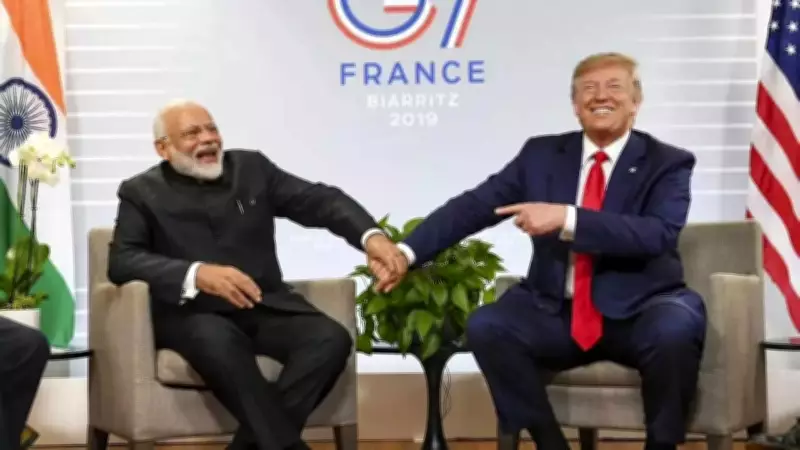
Prime Minister Narendra Modi has strategically leveraged the Indian diaspora as a diplomatic resource, organizing major events in U.S. cities to showcase India's global influence and soft power. Despite this, American understanding of India still lags behind its focus on China.
Indian Americans have achieved remarkable prominence in technology sectors and political spheres, particularly in Silicon Valley and through H-1B visa programs. However, this success has sometimes triggered backlash amid rising populist sentiments in the United States.
Acharya argues that such resentment reflects broader anti-immigrant currents rather than direct job displacement concerns. Politically diverse, segments of the Indian diaspora appear to be trending conservative—in some cases as a pathway toward assimilation in an increasingly polarized American political landscape.
The convergence of demographic advantages, economic momentum, strategic multi-alignment, and diaspora influence positions India uniquely in what may indeed become "India's century"—not through domination of a unipolar or bipolar world, but through leadership in a genuinely multiplex global order where multiple powers shape international affairs.