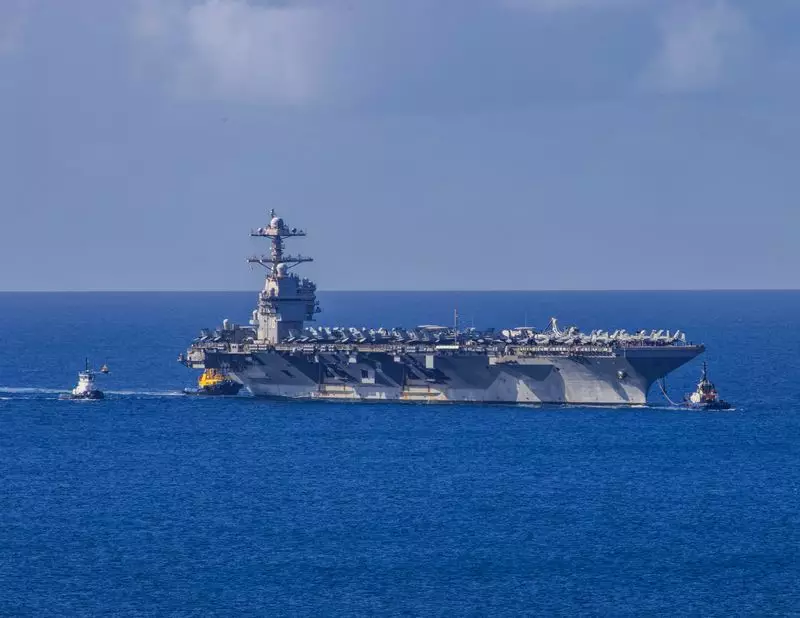
India's Strategic Landscape Alters with US Military Redeployment to Gulf
India is confronting significant strategic worries as the United States initiates a major repositioning of its military forces toward the Gulf region. This development, emerging from broader US foreign policy adjustments, carries profound implications for New Delhi's security environment and diplomatic maneuvering in a volatile geopolitical arena.
Understanding the US Military Shift and Its Immediate Context
The movement of US forces represents a calculated strategic pivot by Washington, reflecting evolving priorities in Middle Eastern security architecture. While official statements emphasize routine operational adjustments, analysts perceive this as part of a larger rebalancing act that could reshape power equations across South Asia and the Middle East.
For India, which has cultivated increasingly robust defense and strategic partnerships with the United States over recent decades, this redeployment introduces new variables into an already complex security calculus. The timing is particularly sensitive as India navigates multiple regional challenges simultaneously.

Multidimensional Strategic Concerns for New Delhi
Energy Security Implications: The Gulf region remains crucial to India's energy security, with approximately 60% of India's oil imports originating from Middle Eastern suppliers. Any destabilization in the Gulf, whether from heightened tensions or conflict escalation, could directly threaten India's energy supply lines and economic stability.
Regional Balance of Power: The US military presence recalibration may alter the delicate equilibrium between regional powers, potentially emboldening certain actors while constraining others. India must carefully assess how these shifting dynamics might affect its relationships with Gulf Cooperation Council (GCC) nations, Iran, and other stakeholders in the region.
Counterterrorism Cooperation: India and the United States have developed substantial counterterrorism collaboration, particularly regarding threats emanating from Pakistan-based militant groups. Any reduction of US focus on South Asia could potentially impact intelligence sharing and coordinated counterterrorism efforts that benefit Indian security interests.
Broader Geopolitical Considerations
The US military movement occurs against a backdrop of intensifying great power competition, particularly between the United States and China. India's strategic calculations must now account for how this redeployment might influence:
- China's expanding footprint in the Indian Ocean Region and Middle East
- Russia's continued engagement with traditional partners in West Asia
- Pakistan's positioning as both a US security partner and China's close ally
- Iran's regional ambitions and India's historical ties with Tehran
Diplomatic Navigation and Strategic Autonomy
This development presents India with both challenges and opportunities in exercising its cherished principle of strategic autonomy. New Delhi must skillfully navigate between maintaining strong ties with Washington while preserving independent relationships with Middle Eastern nations, particularly as it seeks to balance relations with competing regional powers.
The situation underscores India's growing need to develop more robust indigenous security capabilities and diversified international partnerships. As external power configurations shift, India's diplomatic agility and military preparedness will face renewed tests in protecting national interests across multiple theaters.
Ultimately, while the US military movement to the Gulf represents a single development in global security affairs, its ripple effects will likely influence India's strategic thinking for years to come, necessitating careful analysis and calibrated responses from New Delhi's security establishment.