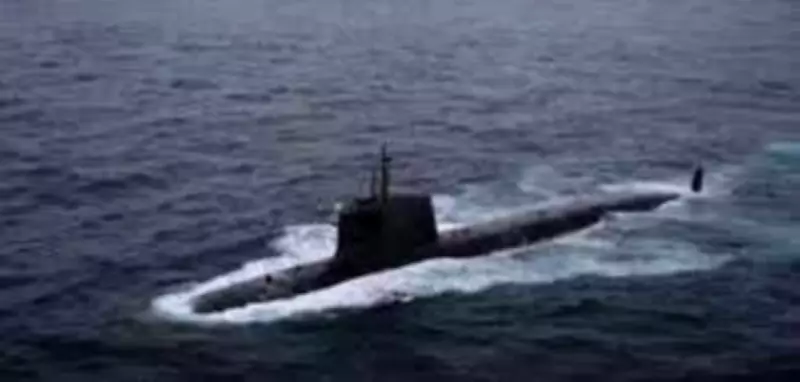
India's Third Indigenous Nuclear Submarine INS Aridhaman Set for Summer Commissioning
India's naval power is poised for a significant leap forward with the imminent commissioning of its third indigenous Arihant-class nuclear-powered ballistic missile submarine (SSBN), INS Aridhaman. Designated S4, this advanced vessel is expected to enter service by April-May this year, according to defence sources.
Final Stages of Sea Trials Underway
The submarine is currently undergoing final sea trials, with commissioning anticipated this summer. This timeline aligns with statements made by Navy chief Admiral D K Tripathi in December, who confirmed that INS Aridhaman would be commissioned within the current year.
Built under the Advanced Technology Vessel (ATV) project at the Ship Building Centre in Visakhapatnam, INS Aridhaman represents a substantial upgrade over its predecessors. With a displacement of 7,000 tonnes, it surpasses the 6,000-tonne INS Arihant and INS Arighaat, allowing for enhanced capabilities and weaponry.

Enhanced Missile Capabilities and Strategic Significance
The submarine will be armed with a formidable combination of missiles: 24 K-15 Sagarika submarine-launched ballistic missiles (SLBMs) with a 750 km range and eight K-4 SLBMs boasting an impressive 3,500 km range. This extended reach enables coverage of most parts of Asia, significantly bolstering India's strategic deterrence.
Once operational, INS Aridhaman will mark a historic milestone for India's Strategic Forces Command (SFC). For the first time, India will have three operational ballistic missile submarines simultaneously at sea, moving the nation closer to achieving 'Continuous At-Sea Deterrence'. This strategic defence policy involves maintaining at least one SSBN on patrol 365 days a year, ensuring a constant nuclear deterrent presence.
As a stealthy underwater platform, INS Aridhaman substantially enhances India's "second-strike" capability—the crucial ability to retaliate effectively after surviving a nuclear attack. The submarine is specifically designed to carry more long-range nuclear-tipped missiles than its predecessors, providing greater flexibility and firepower.
Advanced Technological Features
INS Aridhaman incorporates cutting-edge technology to maximize its operational effectiveness. Key features include:
- An 83 MW pressurised water reactor for propulsion
- Indigenous USHUS and Panchendriya sonar systems for superior target detection
- Improved acoustic damping with anechoic tiles to reduce noise signature
- Advanced sonar suites for enhanced underwater awareness
These technological advancements make the submarine harder to detect, increasing its survivability and strategic value. Once commissioned, INS Aridhaman will be based at Project Varsha, a high-security facility featuring underground pens near Visakhapatnam.
Broader Naval Modernization Context
The commissioning of INS Aridhaman occurs within a broader context of naval modernization and regional security dynamics. In addition to this indigenous project, the Indian Navy is securing an Akula-class SSN nuclear-powered attack submarine from Russia, commonly referred to as "Chakra III", with expected delivery by 2027 or early 2028.
Furthermore, India and Germany are in the final stages of negotiating a substantial $8-10 billion Project-75(I) deal. This agreement aims to build six advanced conventional diesel-electric submarines equipped with Air-Independent Propulsion (AIP) technology, further diversifying India's underwater capabilities.
These acquisitions are particularly timely given regional developments. Pakistan is currently acquiring eight advanced Hangor-class diesel-electric attack submarines from China under a $5 billion deal signed in 2015, significantly bolstering its naval capabilities and creating a more complex security environment in the Indian Ocean region.
The commissioning of INS Aridhaman represents not just another naval vessel joining the fleet, but a strategic asset that strengthens India's position as a responsible nuclear power with credible deterrence capabilities. It underscores the nation's growing technological prowess in defence manufacturing while addressing genuine security requirements in an increasingly volatile geopolitical landscape.