

Iran Accuses US of 'Maximalism' as High-Stakes Ceasefire Talks Collapse in Islamabad
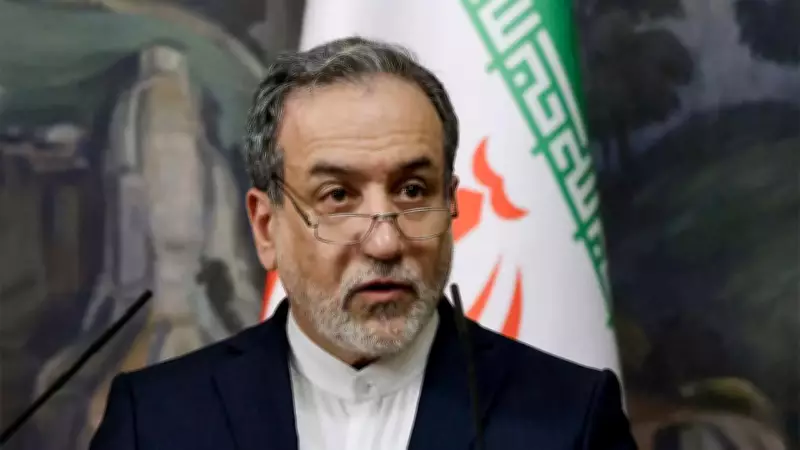
Iran's foreign minister, Abbas Araghchi, has declared that Tehran was "inches away" from finalizing a landmark ceasefire agreement with the United States during intensive negotiations held in Islamabad. However, the talks ultimately broke down due to what he characterized as American "maximalism" and shifting demands at a critical juncture.
Negotiations in Good Faith End in Accusations
In a detailed post on social media platform X, Araghchi stated that Iran had entered the high-level discussions "in good faith" with the primary objective of ending months of escalating conflict. "Iran engaged with the US in good faith to end the war," he wrote, emphasizing the country's commitment to a peaceful resolution.
He further elaborated that, at a pivotal moment in the negotiations, Iranian diplomats "encountered maximalism, shifting goalposts, and blockade" from their American counterparts. This, according to Araghchi, directly led to the collapse of what was being referred to as the "Islamabad Memorandum of Understanding" (MoU).

"Just inches away from agreement... we encountered maximalism, shifting goalposts, and blockade," the foreign minister reiterated. He concluded his statement with a pointed remark: "Good will begets good will. Enmity begets enmity."
Historic Talks End Without Consensus
The discussions in Pakistan represented the highest-level diplomatic engagement between Iran and the United States in nearly five decades. The agenda was ambitious, aiming to secure a fragile ceasefire and address long-standing, contentious disputes, including:
- Iran's nuclear program and uranium enrichment activities.
- Broader regional security concerns and stability.
- Mechanisms for de-escalation and future dialogue.
Despite the historic nature of the meeting, the talks concluded without any consensus. Both sides swiftly engaged in a public blame game over the failure to bridge key gaps. A US official, speaking on condition of anonymity, countered Iran's narrative, stating that Tehran had refused to accept several American "red lines." These reportedly included firm limits on uranium enrichment and other security-related conditions deemed non-negotiable by Washington.
Immediate Escalation: The Hormuz Blockade
Tensions escalated dramatically almost immediately after the talks collapsed. US President Donald Trump announced that the US Navy would initiate a blockade of vessels entering or leaving the Strait of Hormuz, a critical global maritime chokepoint through which approximately one-fifth of the world's oil supply transits.
US Central Command later provided clarification, stating the measures would specifically target Iranian ports and would be enforced "impartially against vessels of all nations." The command assured that transit between non-Iranian ports through the strait would still be permitted.
Iran issued a swift and forceful response, asserting its control over the strategic waterway. The Islamic Revolutionary Guard Corps warned that any military vessels would face a "forceful response," while indicating that non-military commercial shipping could continue to pass. This renewed confrontation sent shockwaves through global energy markets, with crude oil prices experiencing a sharp spike following the blockade announcement.
Diplomatic Channels Remain Open Amid Uncertainty
Despite the significant setback in Islamabad, diplomatic efforts have not been entirely abandoned. Pakistan's foreign minister confirmed that Islamabad would persist in its role as a facilitator for dialogue between the two adversaries. Iran, for its part, signaled a continued openness to further negotiations under the right conditions.
The international community has urged restraint. The European Union and Oman have called for a renewal of talks, while Russia has offered its services as a potential mediator to help bridge the divide.

Within Iran, officials have framed the failure as a result of American overreach rather than an irreconcilable clash over core nuclear issues. A senior Iranian negotiator claimed the discussions foundered over "two or three key issues," accusing Washington of attempting to expand its list of demands at the last possible moment.
The collapse of the Islamabad talks leaves the future of the ceasefire in serious doubt. With the current truce period set to expire later this month, there is no clear path forward, raising the specter of renewed and potentially intensified conflict in the region.





