

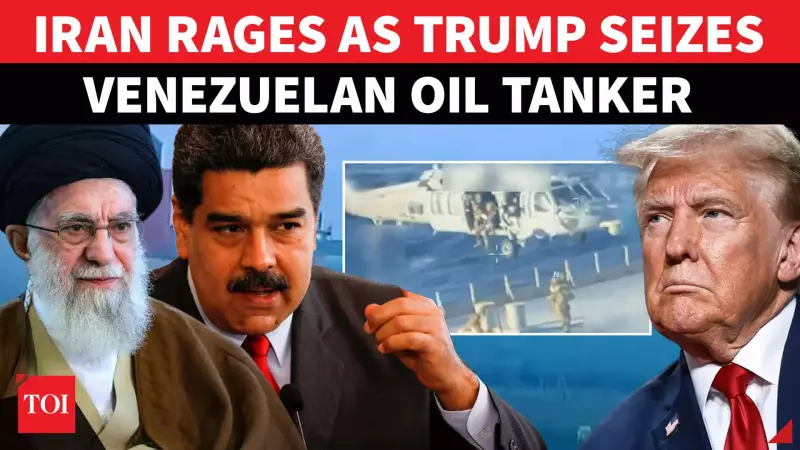
Iran has launched a fierce diplomatic attack against the United States following the seizure of a Venezuelan oil tanker, labelling the American action as nothing short of "state-sponsored piracy." The sharp criticism, issued on December 16, 2025, accuses Washington of violating international law and crossing established legal red lines, setting the stage for a potential escalation in an already volatile geopolitical arena.
Tehran's Stern Warning and Legal Challenge
The Iranian government did not mince words in its official response. It asserted that the US move fundamentally undermines global maritime norms and poses a direct threat to stability in Latin America. By framing the seizure as an act of piracy, Tehran is attempting to rally international opinion against Washington's use of unilateral sanctions and coercive pressure on Caracas.
Iran has explicitly called upon the global community to mount a collective response. Its central argument is that opposition to maritime piracy must be applied uniformly, regardless of the power of the state involved. This principle, Tehran insists, is crucial for maintaining the integrity of international law.

Growing Geopolitical Alignment Against US Action
Iran is not alone in its condemnation. China has also voiced strong opposition to the seizure, criticising the US reliance on unilateral sanctions. Meanwhile, Russia's recent and deepening engagement with the Venezuelan government in Caracas highlights a significant geopolitical trend.
These reactions from major global powers point to a strengthening alignment against US policy in Venezuela. The incident is rapidly becoming a flashpoint, intensifying existing tensions centred on Venezuela's crucial oil exports. The coordinated criticism suggests a broader challenge to American influence in the region.
Broader Implications for Regional and Global Stability
The seizure of the tanker and the vehement international backlash it has triggered underscore the high stakes involved in the struggle over Venezuela's resources. Iran's warning that such actions threaten regional stability is a clear signal that it views the situation as part of a wider conflict.
With major powers like Russia and China backing Caracas and criticising Washington, the episode risks further fragmenting the international order. The call for a unified global response to what is termed "state-sponsored piracy" sets a precedent that could complicate future maritime enforcement actions by powerful nations.
As of now, the ball is in the international community's court. Whether other nations heed Iran's call for a collective stand will determine if this incident remains a bilateral dispute or morphs into a larger multilateral confrontation over energy, sovereignty, and the rules of the global commons.






