

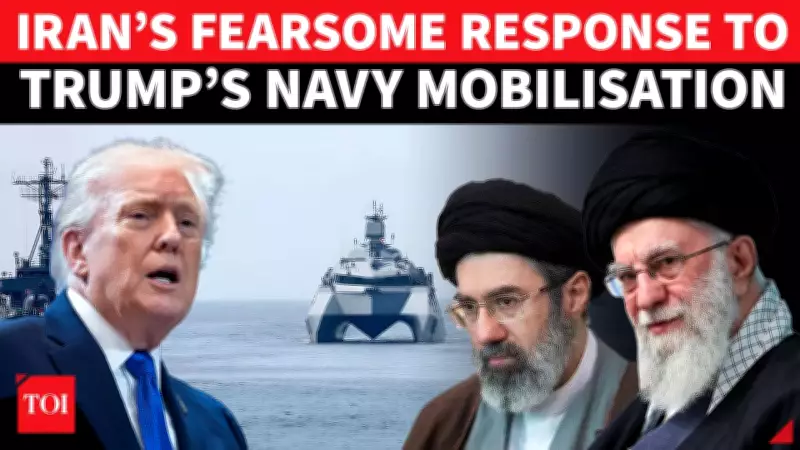
Iran's Defiant Stance on Strait of Hormuz
In a bold geopolitical move, Iran has declared that the strategic Strait of Hormuz will remain closed, delivering a stark rebuke to former US President Donald Trump's recent call for a coalition of global warships to secure the waterway. This announcement represents a significant escalation in tensions between Tehran and Washington, with Iran accusing the United States of being the primary source of regional instability for decades.
Senior Official Issues Stern Warning
Mohsen Rezaei, a senior Iranian official and former commander of the Islamic Revolutionary Guard Corps (IRGC), emphasized that Trump's proposal is fundamentally futile. "Regional control, reparations for past attacks, and complete US withdrawal are the only viable paths to achieving lasting stability in the Persian Gulf," Rezaei stated, outlining Iran's non-negotiable conditions.
Rezaei's declaration underscores Iran's confidence in its current position. The official claimed that Iran has emerged stronger across multiple domains—politically, economically, and militarily—effectively shattering what he described as "the longstanding myth of American invincibility in the region."

Strategic Implications for Global Oil Trade
The Strait of Hormuz serves as a critical chokepoint for global oil shipments, with approximately one-fifth of the world's petroleum passing through its narrow waters. Trump's urgent appeal for an international naval coalition to "protect" these shipments highlights the economic stakes involved, particularly for Western nations and their allies.
However, Tehran remains unmoved. Iranian authorities maintain that the Strait is definitively off-limits to such foreign military presence, framing the closure as a sovereign decision and a necessary response to perceived American aggression. This position signals what analysts describe as a devastating blow to US influence and strategic leverage in the Persian Gulf.
Broader Regional Context
This confrontation occurs against a backdrop of heightened regional tensions. Iran's declaration is not merely about maritime access but represents a broader challenge to US foreign policy and its network of alliances in the Middle East. By asserting control over this vital waterway, Iran aims to demonstrate its capacity to dictate terms and resist external pressure.
The standoff raises serious questions about the future of security in the Gulf and the potential for miscalculation. While Trump advocates for a show of force, Iran's uncompromising stance suggests that any attempt to forcibly reopen the Strait could trigger a significant conflict, with global energy markets hanging in the balance.






