

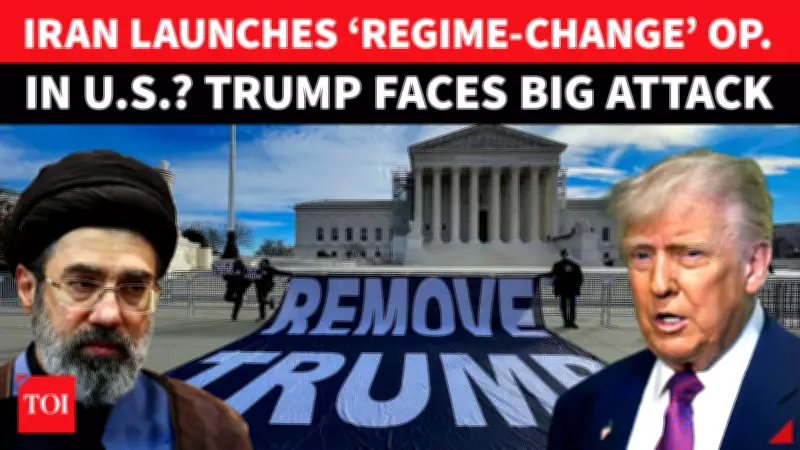
Iran Issues Strong Rebuttal to Trump's 'Stone Age' Warning
Diplomatic tensions between the United States and Iran have intensified dramatically following a provocative statement from U.S. President Donald Trump. The President warned that Iran could face military action severe enough to bomb the nation "back to the Stone Age." This stark threat has triggered a swift and forceful response from Iranian officials, escalating an already volatile geopolitical standoff.
Araghchi Condemns U.S. Rhetoric and Questions American Intent
Iran's Foreign Minister, Abbas Araghchi, delivered a pointed critique of President Trump's remarks. He openly questioned the judgment behind such inflammatory language and challenged whether the American populace genuinely desires to "turn back the clock" on progress and stability. Araghchi emphasized that such threats are not merely rhetorical but carry profound implications for international relations and security.
"The tone and implications of these statements are reckless and dangerous," Araghchi stated, underscoring the potential consequences of escalating conflict. He further highlighted the critical strategic importance of the Middle East, particularly its vast oil and gas resources, suggesting that destabilization would have global economic repercussions.

Revolutionary Guard Labels Trump's Remarks as 'Blunt and Personal'
The Islamic Revolutionary Guard Corps (IRGC), a powerful branch of Iran's military, issued its own stern condemnation. In an official statement, the IRGC characterized Trump's warning as "blunt and personal" aggression. The Guard argued that advocating for a return to a "Stone Age" era is more reflective of Trump's own confrontational rhetoric and approach to diplomacy than a viable foreign policy strategy.
This military response signals Iran's readiness to defend itself and frames the U.S. threat as an attack on the nation's sovereignty and modern existence.
Broader Concerns Over Political Responsibility and Global Stability
Minister Araghchi expanded his criticism beyond the immediate threat, raising significant concerns about political accountability and the preservation of global order. He argued that leaders bear a heavy responsibility to avoid language that could precipitate widespread conflict, especially in a region as pivotal as the Middle East.
The exchange underscores a deepening rift, with Iran positioning itself as a defender of regional stability against what it perceives as irresponsible U.S. provocations. The situation remains fluid, with the international community closely monitoring for further developments that could impact oil markets, diplomatic alliances, and security frameworks worldwide.






