

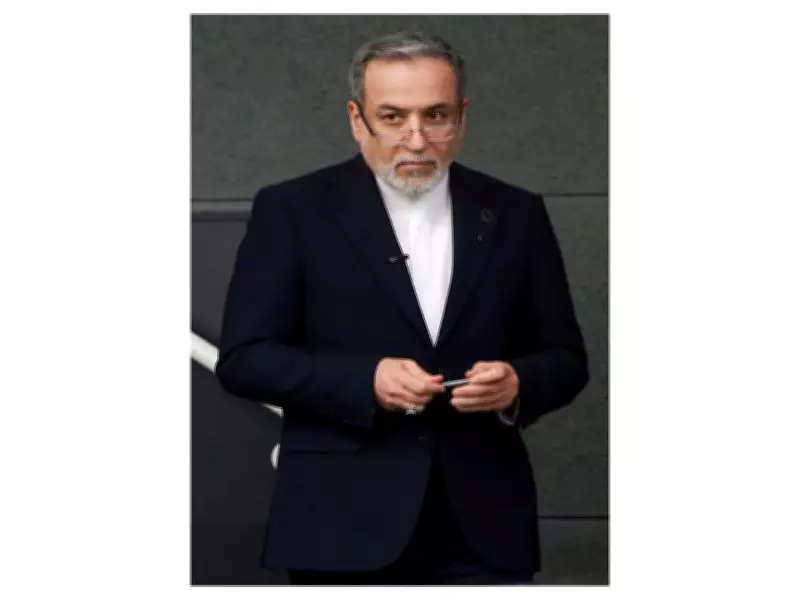
Iran's Foreign Minister Condemns US Security Role in West Asia
In a sharp critique of American foreign policy, Iran's Foreign Minister Seyed Abbas Araghchi has declared that the United States' security umbrella in West Asia is fundamentally flawed. Speaking on Saturday, Araghchi emphasized that Washington's approach has failed to safeguard regional nations, instead exacerbating instability.
Araghchi's Social Media Statement Highlights Security Failures
Through a post on X, Araghchi articulated his concerns, stating, "Touted US security umbrella has proven to be full of holes and inviting rather than deterring trouble." He further accused the US of seeking assistance from other global powers, including China, to secure the strategic Strait of Hormuz, a vital maritime passage for oil shipments.
"US is now begging others, even China, to help it make Hormuz safe," Araghchi added, underscoring Iran's perspective on American reliance on external support for regional security matters.

Call for Regional Unity Against Foreign Intervention
Araghchi extended a direct appeal to neighboring countries, urging them to expel foreign military forces from the region. "Iran calls on brotherly neighbors to expel foreign aggressors, especially as their only concern is Israel," he asserted, linking the presence of foreign troops to broader geopolitical tensions centered on Israel.
This call to action reflects Iran's longstanding opposition to Western military involvement in West Asia, advocating for regional autonomy and cooperation among Middle Eastern nations.
Trump's Response and Escalating Tensions Over Hormuz
The Iranian minister's comments come in response to earlier statements by former US President Donald Trump, who outlined aggressive measures to ensure the Strait of Hormuz remains open. Trump announced plans for a multinational naval deployment, including warships from the US and allied countries such as China, France, and Japan.
In a post on Truth Social, Trump detailed his strategy, stating, "Many Countries, especially those who are affected by Iran's attempted closure of the Hormuz Strait, will be sending War Ships, in conjunction with the United States of America, to keep the Strait open and safe." He further threatened military action against Iran, including bombing shorelines and targeting Iranian vessels.
Trump emphasized, "In the meantime, the United States will be bombing the hell out of the shoreline, and continually shooting Iranian Boats and Ships out of the water. One way or the other, we will soon get the Hormuz Strait OPEN, SAFE, and FREE!"
Broader Implications for Regional Security Dynamics
This exchange highlights the deepening rift between Iran and the United States, with significant implications for global energy security and regional stability. The Strait of Hormuz serves as a critical chokepoint for oil transportation, and any disruption could have far-reaching economic consequences.
Iran's stance, as articulated by Araghchi, positions the nation as a defender of regional sovereignty against perceived Western aggression. Meanwhile, the US and its allies frame their actions as necessary to protect international maritime routes and counter Iranian threats.
As tensions escalate, the call for neighbors to expel foreign forces adds a new layer to the complex geopolitical landscape of West Asia, potentially influencing alliances and security policies across the Middle East.






