

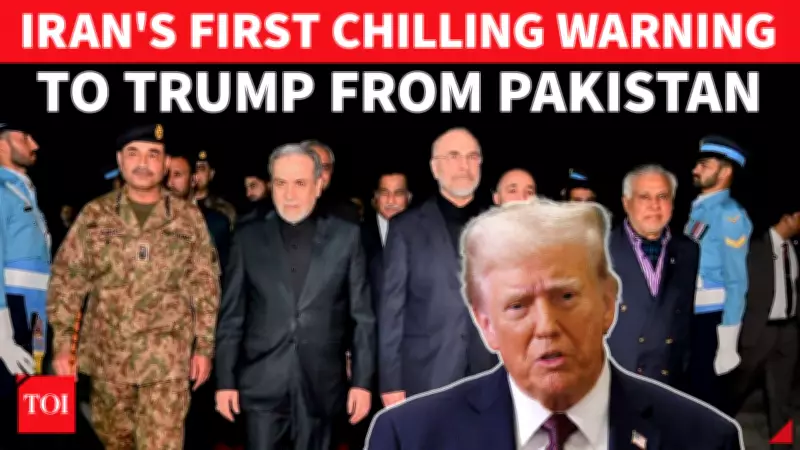
Iran's Delegation Issues Blistering Warning to US from Pakistan
In a dramatic diplomatic move, Iran has issued its first stern warning to the United States from Pakistani soil, setting a tense tone for upcoming high-level discussions. The Iranian delegation, which arrived in Islamabad for talks with American officials, carried a clear message of cautious engagement, underscored by deep-seated mistrust toward Washington.
'If You Cheat This Time...': A Message of Caution
Speaking ahead of the critical negotiations, Iranian Parliament Speaker Mohammad Bagher Ghalibaf emphasized that while Tehran is open to dialogue and a potential agreement, historical grievances and ongoing suspicions continue to define relations with the US. The delegation's arrival, escorted by Pakistani jets, highlights the high-stakes nature of these talks, which come at a particularly sensitive moment in regional geopolitics.
Key Figures and Strategic Concerns
The Iranian team includes senior officials handling political, nuclear, and economic portfolios, reflecting the comprehensive scope of the discussions. Key priorities for Iran include:

- Sanctions relief to alleviate pressure on its struggling economy
- Addressing broader strategic security concerns in the Middle East
- Establishing verifiable mechanisms for any potential agreements
This multi-faceted approach demonstrates Iran's determination to tackle both immediate economic challenges and long-term geopolitical positioning through these negotiations.
Regional Tensions and Economic Pressures
The talks unfold against a backdrop of escalating regional tensions and significant economic strain on Iran. With conflicts simmering across the Middle East and international sanctions continuing to bite, Tehran finds itself navigating complex domestic and international pressures simultaneously. The delegation's warning to Washington reflects this precarious balancing act, where Iran seeks engagement without compromising its strategic interests.
A Wary Dance of Diplomacy
Despite signals of willingness to negotiate from both sides, mutual wariness characterizes the diplomatic atmosphere. The United States approaches these talks with its own set of concerns regarding Iran's regional activities and nuclear ambitions, while Iran remains skeptical of American commitments following previous diplomatic disappointments.
This combination of economic necessity and strategic caution creates a delicate diplomatic dance, where both parties must navigate deep historical mistrust while seeking practical solutions to pressing issues. The warning issued from Pakistan serves as a reminder that while dialogue may be open, trust remains in short supply, setting the stage for what promises to be difficult and closely monitored negotiations in Islamabad.






