

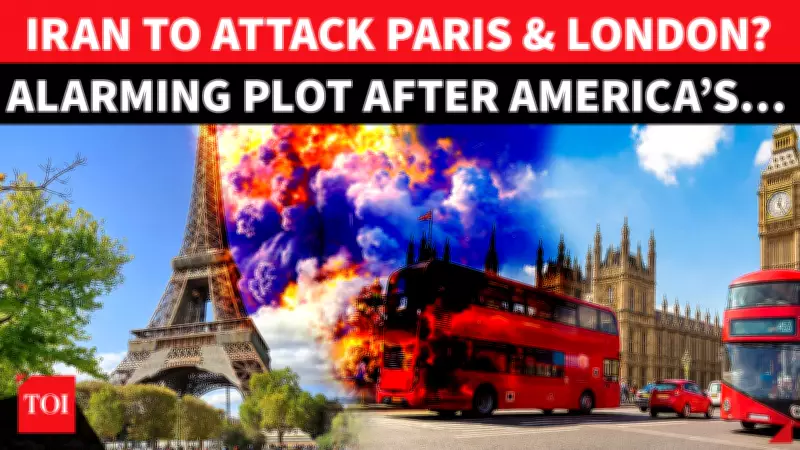
Iran's 4000 Km Missile Strike Capability Triggers Alarm In Paris & London
Israel's Ambassador to the United Nations, Danny Danon, has issued a stark and urgent warning to European nations, asserting that Iran's advanced missile capabilities now pose a direct and immediate threat to major metropolitan centers across the continent. In a statement that has reverberated through diplomatic circles, Danon accused Tehran of systematically misleading the international community regarding the true operational range of its ballistic missile arsenal.
European Capitals Within Range
Ambassador Danon cited recent missile launches and intelligence assessments as evidence that Iran's weapons can now reliably strike iconic European cities. The cities specifically named as being within range include Paris, London, Athens, Copenhagen, and Riga. This revelation marks a significant escalation in the perceived threat landscape, shifting the focus from regional Middle Eastern security to the heart of Europe.
"The regime in Tehran has not been transparent about its military advancements," Danon stated, emphasizing the gravity of the deception. The ambassador's warning underscores a growing consensus among Western security analysts about Iran's rapid progress in missile technology, which appears to have accelerated despite international sanctions and diplomatic pressures.

Potential for Global Reach
Perhaps more alarming is the ambassador's projection for the future. Danon warned that if Iran's missile development continues on its current trajectory, the range could expand to threaten targets far beyond the European continent. This scenario raises the specter of a future where Iranian missiles could potentially reach the United States, fundamentally altering global strategic stability and defense postures.
The statement from the Israeli UN envoy arrives amid a period of heightened global tensions and increasing anxiety over missile proliferation. Regional conflicts and escalations have fueled fears that advanced weaponry could fall into the hands of non-state actors or be used in broader confrontations, destabilizing not only the Middle East but also international security architectures.
Context of Rising Tensions
This warning is not an isolated incident but part of a pattern of escalating rhetoric and military posturing. Recent months have seen:
- Increased drone and missile activity attributed to Iranian-linked forces.
- Strikes on various international assets and infrastructure in the Gulf region.
- Growing concerns about the role of state actors like Russia in aiding technological advancements.
- Fierce political debates in Western capitals regarding appropriate responses to the Iranian threat.
The convergence of these factors creates a volatile international environment where miscalculation or provocation could lead to significant conflict. Ambassador Danon's alert serves as a clarion call for European nations to reassess their defense strategies and diplomatic engagements concerning Iran.
As the situation develops, the international community faces critical questions about non-proliferation treaties, the effectiveness of current sanctions regimes, and the need for a coordinated global response to curb the advancement of long-range missile technology by state actors deemed adversarial to Western interests.






