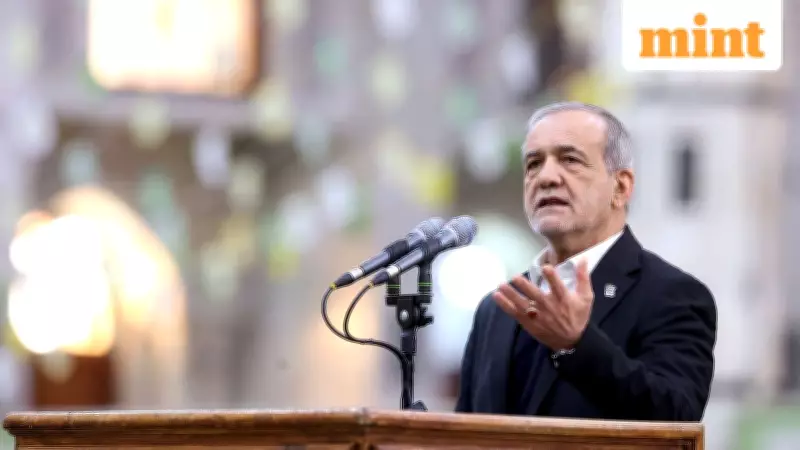
Iran Signals Conditional Openness to US Talks Amid Rising Tensions
Iranian President Masoud Pezeshkian has indicated a conditional openness to negotiations with the United States, marking a potential diplomatic opening while setting strict preconditions. This development comes as regional tensions escalate, with Washington recently dispatching an aircraft carrier strike group to the Middle East following Iran's crackdown on anti-government protests.
President Pezeshkian's Statement on Negotiation Terms
In a formal statement posted on social media platform X, President Pezeshkian revealed that he has instructed Foreign Minister Abbas Araghchi to explore groundwork for talks proposed by the US president. However, he emphasized that such negotiations must occur in an atmosphere free from threats and unreasonable expectations.
"I have instructed my Minister of Foreign Affairs, provided that a suitable environment exists -- one free from threats and unreasonable expectations -- to pursue fair and equitable negotiations," Pezeshkian stated. He further clarified that any prospective engagement must be conducted within the framework of Iran's national interests, based on principles of dignity, wisdom, and expediency.

Context of Heightened Regional Tensions
The Iranian leader's remarks suggest Tehran is attempting to project willingness for dialogue without appearing to concede under pressure. This diplomatic maneuvering occurs against a backdrop of:
- Increased US military presence in the Middle East
- Recent anti-government protests in Iran and subsequent government response
- Ongoing nuclear negotiations between the two nations
- Broader regional security concerns
US President Donald Trump has expressed hope that Washington will "work something out" with Tehran, but simultaneously warned that "bad things would happen" if no agreement is reached. This dual messaging reflects the complex diplomatic landscape both nations navigate.
Iran's Negotiation Parameters and Red Lines
Iranian authorities have consistently maintained several key positions regarding potential negotiations with the United States:
- Nuclear Focus Only: Tehran insists any talks must be strictly confined to the nuclear file, rejecting discussions on its missile program or broader defense capabilities.
- Fair and Equitable Terms: The Iranian government emphasizes that negotiations can only proceed on terms it considers fair and balanced.
- Response to Aggression: While favoring diplomacy, Iranian officials have vowed an unrestrained response to any act of aggression.
Foreign Minister Araghchi reinforced this position in a recent CNN interview, stating: "So I see the possibility of another talk if the US negotiation team follows what President Trump said: to come to a fair and equitable deal to ensure that there is no nuclear weapons."
Supreme Leader's Warning and Regional Implications
Iran's Supreme Leader Ali Khamenei has issued a stark warning that any US attack on Iran could trigger a regional war, highlighting the high stakes surrounding renewed diplomatic engagement. This statement underscores the broader security implications of US-Iran relations beyond bilateral concerns.
The conditional openness to talks represents a delicate balancing act for Iran's leadership - demonstrating willingness for diplomatic resolution while maintaining firm positions on national sovereignty and security interests. As both nations navigate this complex diplomatic terrain, the international community watches closely for developments that could significantly impact Middle East stability and global security architecture.