In a significant diplomatic move, the Islamic Republic of Iran has formally called upon the United Nations to take a firm stance against what it terms as "provocative" and "incendiary" warnings issued by former United States President Donald Trump. This urgent appeal comes against a backdrop of widespread civil unrest within Iran, triggered by a government decision to abruptly increase fuel prices.
Diplomatic Offensive at the United Nations
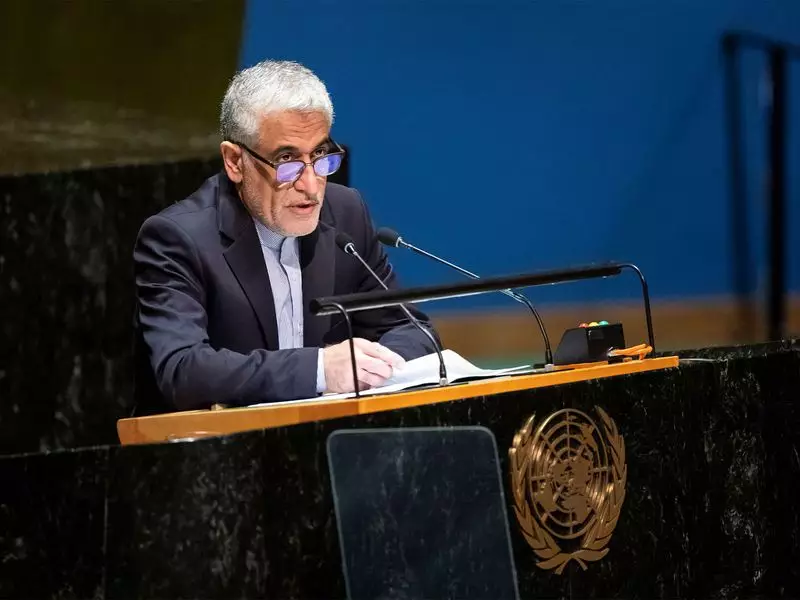
Iran's UN mission lodged a strong protest with the UN Security Council and Secretary-General Antonio Guterres. The core of their complaint revolves around statements made by Trump on his social media platform, Truth Social. Iranian diplomats accused Trump of openly threatening to target Iranian cultural sites, a move they argue constitutes a blatant violation of international law and the principles enshrined in the UN Charter.
The Iranian letter, dated November 19, 2023, explicitly requests the world body to "strongly condemn" these remarks. It emphasizes that such threats represent a serious danger to regional and global peace and security. The mission underscored that the protection of cultural heritage is a well-established norm under international law, notably within the 1954 Hague Convention, to which both nations are signatories.

Trump's Comments and the Context of Unrest
The controversy stems from Donald Trump's online posts, where he commented on the ongoing protests in Iran. He suggested that the US military should strike Iranian cultural locations if Tehran threatened American assets or personnel. These comments have reignited fears of a potential escalation between the two long-standing adversaries.
This diplomatic flare-up occurs while Iran is managing nationwide demonstrations. The protests erupted after the government slashed subsidies on fuel, leading to a sharp price spike of at least 50%. The economic decision, aimed at curbing budget deficits, has sparked public anger and street protests across several cities, presenting a major challenge to the administration.
Broader Implications and Regional Tensions
Iran's appeal to the UN is not merely about condemning one individual's statements. It is viewed as part of a broader effort to diplomatically isolate and pressure the United States, particularly by highlighting actions that could be framed as war crimes. The reference to cultural sites is especially sensitive, as their destruction is widely considered a grave breach of international humanitarian law.
This incident adds another layer of complexity to the already fraught US-Iran relationship. The tensions have persisted since the US withdrawal from the 2015 nuclear deal (JCPOA) under Trump's presidency and have seen various phases of military and economic confrontations. Iran's move seeks to mobilize international opinion and potentially constrain future US policy options by framing aggressive rhetoric as universally unacceptable.
The situation remains fluid, with the UN yet to issue a formal public response to Iran's letter. The outcome of this diplomatic gambit will be closely watched, as it tests the international community's willingness to address provocative rhetoric from a major global power and its impact on a region already simmering with discontent.