

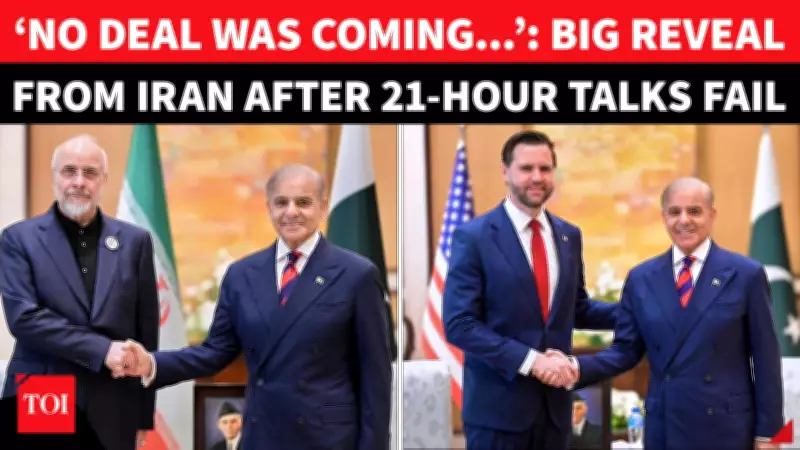
Iran Firmly Rejects US Demands as Islamabad Negotiations Stall
In a significant diplomatic development, marathon negotiations between Iran and the United States in Islamabad have concluded without an agreement, with Iranian officials delivering a blunt rejection of American demands. The talks, which were closely watched globally, highlighted deep-seated tensions over critical strategic issues.
No Quick Fix Expected, Says Iranian Foreign Ministry
Iran's foreign ministry made it clear that expectations for a swift resolution were unrealistic from the outset. "No one had held any expectation that talks with the United States could have reached an agreement within one session," a spokesperson stated, emphasizing the complexity of the discussions. This statement underscores the protracted nature of the negotiations, which stalled amid fundamental disagreements.
Iran 'Kills' Vance's Key Demands
Iranian state media reported a decisive stance from Tehran, declaring that Iran killed JD Vance's demand to hand over Hormuz and uranium. This phrase, used prominently in official communications, signals Iran's unwavering position on two pivotal matters: control over the Strait of Hormuz and its uranium enrichment activities. The Strait of Hormuz is a vital maritime chokepoint for global oil shipments, while uranium is central to Iran's nuclear program, both of which are non-negotiable for Iranian leadership.

Vance Returns Home Empty-Handed
U.S. Vice President JD Vance returned to Washington DC without securing any agreement, marking a setback in efforts to de-escalate tensions. The face-to-face talks in Islamabad ended in a deadlock, with both sides failing to bridge their differences. This outcome reflects the broader challenges in US-Iran relations, which have been strained by issues ranging from nuclear proliferation to regional security.
Broader Implications and Regional Context
The failure of these negotiations occurs against a backdrop of heightened regional instability. Recent events, such as Iran's warnings to the US and Israel, drone strikes near Baghdad targeting US diplomatic convoys, and Hezbollah's clashes with Israeli forces, add layers of complexity to the diplomatic landscape. Iran's assertion of its "upper hand" in talks and its readiness for "any scenario" further illustrate the hardened positions that hindered progress in Islamabad.
As both nations regroup, the stalemate raises questions about future engagement strategies. With Iran dismissing US demands as "excessive" and Vance's mission ending without tangible results, the path forward remains uncertain, potentially impacting global oil markets and security dynamics in the Middle East.






