

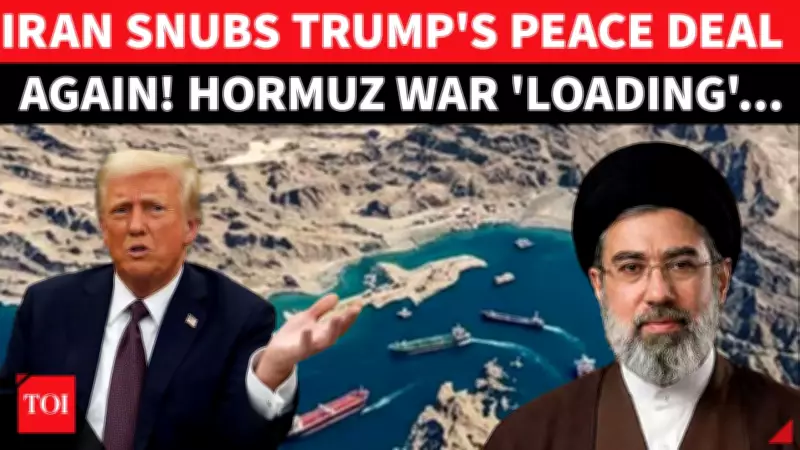
Iran Rejects US Peace Talks, Cites Trump's Naval Blockade and 'Excessive Demands'
In a significant diplomatic setback, Iran has reportedly refused a second round of peace talks with the United States, effectively blowing up the Trump administration's efforts to de-escalate tensions. According to an Iranian media report, Tehran has placed the blame squarely on former President Donald Trump's naval blockade of Iranian ports and what it describes as Washington's "excessive demands" during negotiations held in Islamabad last week.
Stalemate Over Strait of Hormuz and Naval Blockade
The rejection comes amid heightened maritime tensions, with Iran threatening to block the strategic Strait of Hormuz once again. This critical waterway is a vital chokepoint for global oil shipments, and any disruption could have severe implications for international trade and energy markets. Tehran's stance appears to be a direct response to Trump's reiterated emphasis on maintaining a US naval blockade on Iranian ports, a move that Iran views as aggressive and counterproductive to peace efforts.
Iranian officials have stated that avoiding what they term "excessive demands" by the United States in negotiations was a fundamental condition for the talks to continue. This condition, they argue, was not met during the Islamabad discussions, leading to the current impasse. The report suggests that Iran sees the US demands as unreasonable and designed to undermine its sovereignty, making further dialogue untenable without concessions from Washington.

Background and Broader Implications
The peace talks, which aimed to address longstanding conflicts and regional stability, have been closely watched by global observers. Iran's rejection not only stalls diplomatic progress but also raises the risk of renewed hostilities in the Middle East. The situation is further complicated by related geopolitical developments, including Russia's recent revelations about Iran and criticisms of NATO, as well as ongoing tensions in Lebanon and other parts of the region.
As the US reportedly considers military options, with aircraft carriers like the USS Gerald R Ford entering the Middle East, the stakes are higher than ever. Iran's threats to choke the Strait of Hormuz, if carried out, could trigger a broader conflict, impacting global economies and security. The international community is now left to ponder the next steps, with hopes for a peaceful resolution fading in the face of escalating rhetoric and actions.






