

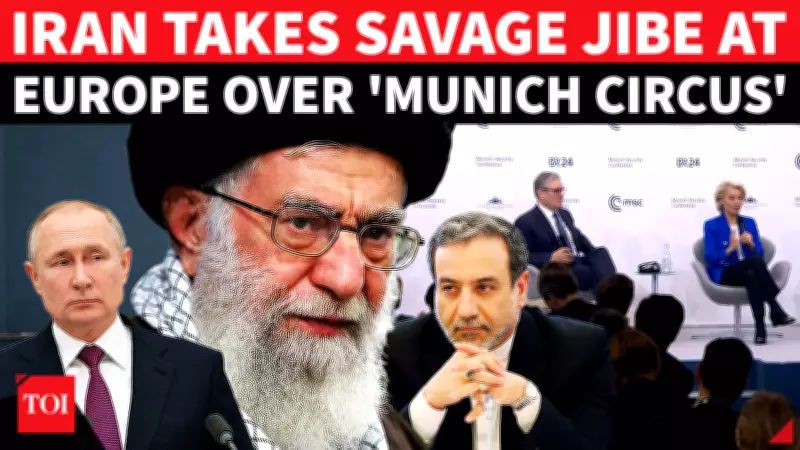
Iran and Russia Unite in Diplomatic Offensive Against Europe at Munich Summit
The Munich Security Conference, a prestigious annual gathering of global leaders, transformed into a geopolitical battleground as Iran and Russia launched a coordinated diplomatic assault against European nations. The event, traditionally focused on international security cooperation, became a platform for sharp criticism and strategic positioning.
Iran's Foreign Minister Dismisses Conference as 'Circus'
Iranian Foreign Minister Abbas Araghchi delivered a scathing critique of the Munich Security Conference, labeling it a "circus" and accusing European Union members, particularly Germany, of surrendering their geopolitical relevance. Araghchi asserted that EU nations have effectively ceded regional policy control to Israel, marking a significant deterioration in Europe's international standing.
The Iranian diplomat's remarks highlighted growing tensions between Tehran and European capitals, with Araghchi specifically targeting what he described as Europe's failure to maintain independent foreign policy initiatives in the Middle East. His comments came amid broader discussions about shifting global power dynamics and the role of traditional Western alliances.

Exiled Iranian Royal Calls for U.S. Pressure on Tehran
Simultaneously, Iran's exiled Crown Prince Reza Pahlavi made a direct appeal to U.S. President Donald Trump, urging him to escalate pressure on the Iranian government and support regime change efforts. Pahlavi's intervention added another layer to the complex geopolitical landscape unfolding at the conference.
The crown prince's call for American intervention reflects ongoing divisions within Iranian political circles and highlights how external actors are increasingly involved in Iran's domestic affairs. His appeal to President Trump specifically referenced the need for stronger measures against Tehran's current leadership.
Russia's Strategic Alignment with Iran
The conference also revealed deepening coordination between Russia and Iran in their approach to European affairs. Russian representatives echoed similar criticisms of EU foreign policy, creating a united front against what both nations characterize as European overreach and declining influence.
This alignment represents a significant development in international relations, with two major powers traditionally operating in different spheres finding common ground in their opposition to European geopolitical strategies. The partnership signals potential shifts in global alliance structures and diplomatic priorities.
Broader Geopolitical Context
The Munich Security Conference discussions occurred against a backdrop of multiple international crises:
- Ongoing conflicts in Ukraine and the Middle East
- Increasing tensions between NATO members and Russia
- Debates about European strategic autonomy versus transatlantic cooperation
- Growing influence of non-Western powers in global governance
These factors contributed to the charged atmosphere at the conference, with traditional diplomatic norms giving way to more confrontational exchanges between representatives of competing geopolitical blocs.
Implications for European Foreign Policy
The coordinated criticism from Iran and Russia presents significant challenges for European Union foreign policy makers. Key considerations include:
- The need to maintain unity among EU member states facing external pressure
- Balancing relationships with traditional allies like the United States while pursuing independent initiatives
- Addressing perceptions of declining European influence in global affairs
- Developing coherent responses to coordinated diplomatic challenges from rival powers
European officials now face the complex task of responding to these criticisms while advancing their strategic interests in an increasingly multipolar world. The Munich Security Conference has highlighted both the vulnerabilities and opportunities in Europe's current geopolitical positioning.

The events at Munich underscore how traditional diplomatic forums are evolving into arenas for strategic competition, with nations increasingly using such platforms to advance their geopolitical agendas through both formal statements and coordinated messaging campaigns.





