

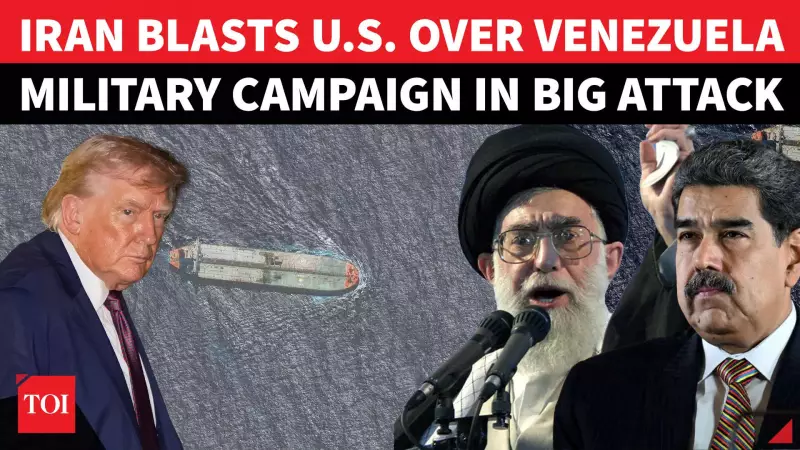
In a significant diplomatic move, the Islamic Republic of Iran has thrown its weight behind the Venezuelan government of Nicolás Maduro. This show of solidarity comes amidst rising hostilities between Caracas and Washington, following a recent military action by the United States.
Diplomatic Call Against 'Illegal Piracy'
On December 22, 2025, Iranian Foreign Minister Syed Abbas Araghchi held a telephone conversation with his Venezuelan counterpart, Foreign Minister Yván Gil Pinto. The high-level discussion was prompted by an incident where the US military blocked a Venezuelan vessel. During the call, Araghchi did not mince words, explicitly labelling Washington's actions as acts of "illegal piracy."
This strong rhetoric from Tehran represents a direct challenge to American foreign policy in the region. The Iranian minister's condemnation frames the US intervention not as a lawful enforcement action but as an illegitimate and aggressive move on the international stage.

A Strategic Alliance Against US Pressure
The timing of Iran's support is crucial for the Maduro administration, which faces sustained political and economic pressure from the United States and its allies. By publicly aligning with Venezuela, Iran provides a huge diplomatic boost to Maduro's government. It signals to Washington that Caracas is not isolated and has powerful partners willing to confront American hegemony.
This development is seen as part of a broader pattern where nations facing US sanctions, like Iran and Venezuela, forge closer ties to counterbalance American influence. The alliance extends beyond mere words, with historical precedents of economic and technical cooperation between the two oil-rich nations under sanctions.
Regional and Global Implications
Iran's fiery entry into the Venezuela-US standoff has several immediate consequences. Firstly, it internationalises the conflict, shifting it from a regional dispute to a flashpoint in the wider geopolitical rivalry between the US and its adversaries. Secondly, it complicates any potential escalation by the US, which must now consider the reactions of other global players.
The move also serves Iran's strategic interests by opening a new front to challenge the United States far from its own borders, potentially diverting American diplomatic and military attention. For Venezuela, the vocal support from a nation like Iran, which has weathered decades of US pressure, offers both political legitimacy and a potential roadmap for resistance.
As of now, the US has not issued a public response to Iran's accusations. However, this exchange marks a clear escalation in diplomatic tensions, setting the stage for further confrontations in the international arena. The world will be watching closely to see if this war of words leads to more tangible actions in the volatile region of Latin America.






