

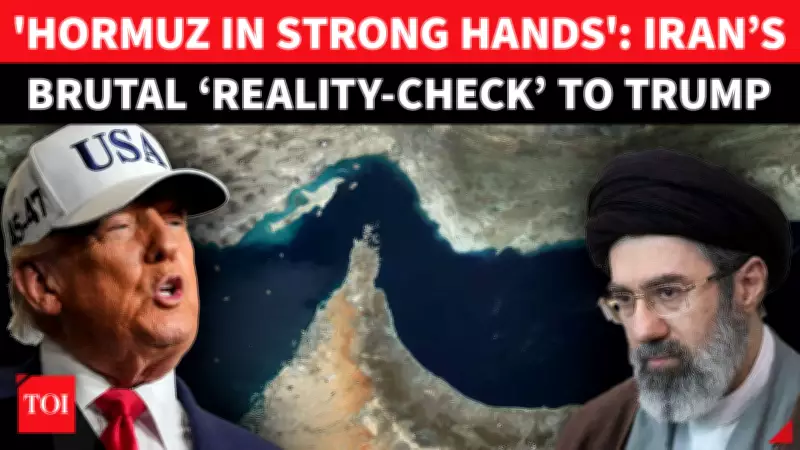
Iran Mocks Trump After Islamabad Talks Collapse, Asserts Control Over Strait of Hormuz
Iran has openly mocked former U.S. President Donald Trump following the failure of high-stakes negotiations in Islamabad, with senior officials asserting that the key to the strategic Strait of Hormuz remains firmly in Tehran's hands. The talks, aimed at resolving tensions over the vital waterway, collapsed amid mutual distrust, leading to a sharp exchange of words between the two nations.
Iranian Officials Taunt Trump Over Failed Diplomacy
Ali Akbar Velayati, a senior advisor to Iran's Supreme Leader Mojtaba Khamenei, declared on Sunday that the Strait of Hormuz is securely under Iran's control, directly challenging Trump's claims of victory. This statement came after Trump, who had touted the talks as a success, faced criticism for the breakdown in negotiations. Velayati emphasized that Iran's military and strategic capabilities ensure its dominance over the strait, a critical chokepoint for global oil shipments.
Mohammad Baqer-Ghalibaf, Iran's parliament speaker and head of the Iranian delegation during the Islamabad talks, added to the criticism by stating that Washington DC failed to win Tehran's trust. He highlighted that the U.S. delegation, led by JD Vance, returned empty-handed, underscoring the deep-seated issues that hindered progress. Ghalibaf's remarks pointed to a lack of substantive concessions from the American side, which Iran viewed as excessive demands.

Background of the Islamabad Talks and Regional Tensions
The Islamabad negotiations were initiated to address escalating tensions in the Middle East, particularly concerning the Strait of Hormuz. Iran has repeatedly warned that it considers the strait non-negotiable, a stance reinforced during the talks. Earlier reports indicated that Iran issued explosive warnings to Trump, threatening to break ties with Israel and asserting its uncompromising position on Hormuz.
In a related development, pro-Iran Hezbollah launched an attack drone into northern Israel, causing panic among residents and highlighting the broader regional conflict. This incident occurred amidst the talks, adding to the volatility. Additionally, Iran ridiculed Trump and Vance for what it described as a futile diplomatic effort, with officials mocking the U.S. for flying halfway across the world for nothing.
Escalating Threats and Military Posturing
As the talks stalled, Iran warned of a forceful response if the U.S. escalated military actions, such as sending destroyers to the Strait of Hormuz. Trump's deployment of two destroyers to the region was seen as a provocative move, potentially reigniting hostilities. Iran's readiness for any scenario was emphasized, with officials flexing their upper hand in the negotiations while Trump watched from afar.
Meanwhile, other regional players added to the tension. Israeli Prime Minister Benjamin Netanyahu reportedly snubbed Trump by threatening to bomb Iran's nuclear sites during the Islamabad talks, further complicating the diplomatic landscape. Drone strikes near Baghdad Airport, targeting areas close to U.S. diplomatic convoys, also prompted reactions from Washington, indicating the widespread instability.
Implications for U.S.-Iran Relations and Global Stability
The collapse of the Islamabad talks underscores the persistent challenges in U.S.-Iran relations, with both sides entrenched in their positions. Iran's mockery of Trump reflects a broader strategy of asserting sovereignty and resisting external pressure, particularly over the Strait of Hormuz. The strait's significance for global oil trade means that any disruption could have far-reaching economic consequences.
Experts suggest that the failure of these negotiations may lead to increased military posturing and potential conflicts in the region. Iran's warnings and Hezbollah's actions signal a readiness to engage in asymmetric warfare, while the U.S. and its allies remain vigilant. The situation calls for renewed diplomatic efforts, but with trust eroded, prospects for immediate resolution appear dim.

In summary, the Islamabad talks have highlighted the deep divisions between Iran and the U.S., with Iran leveraging its control over the Strait of Hormuz to taunt Trump and assert its regional influence. As tensions simmer, the international community watches closely, hoping to avoid a full-scale escalation that could destabilize the Middle East and impact global markets.





