

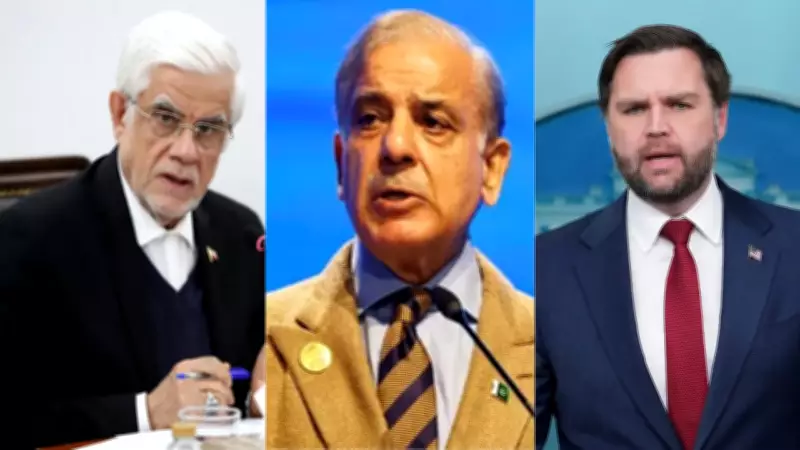
High-Stakes Iran-US Talks Commence in Islamabad Amid Critical Stipulations
High-level diplomatic delegations from Iran and the United States arrived in Islamabad on Saturday for what are being described as pivotal negotiations. The discussions, which have drawn global attention, are unfolding under an atmosphere of intense security and diplomatic urgency.
Iran's Vice-President Sets Clear Precondition for Agreement
Iran's Vice-President, Mohammad Reza Aref, has articulated a fundamental precondition for any potential deal. In a statement that has framed the entire negotiation process, Aref emphasized that an agreement will only be possible if Iranian representatives engage with counterparts who represent an 'America First' approach.
"If we negotiate in Islamabad with representatives of 'America First,' an agreement beneficial to both sides and the world is probable," Aref declared in a post on the social media platform X. "However, if we face representatives of 'Israel First,' there will be no deal; we will inevitably continue our defense even more vigorously than before, and the world will face greater costs."

This stark delineation underscores the high stakes involved, with Aref suggesting that the identity and allegiance of the American negotiators will directly determine the outcome of these critical talks.
Prime Minister Sharif Labels Discussions as 'Make or Break'
Pakistani Prime Minister Shehbaz Sharif has characterized the negotiations as "make or break" for regional stability. The talks are specifically aimed at:
- Stabilizing a fragile ceasefire that was announced on April 8
- Determining the future trajectory of regional security architecture
- Exploring pathways for a lasting diplomatic resolution to ongoing tensions
The Iranian delegation, led by Parliament Speaker Mohammad Baqer Ghalibaf, arrived in Islamabad after midnight, benefiting from unprecedented security protocols. They departed their residence on Saturday morning for the Prime Minister's Office to initiate formal discussions, a move confirmed by the Consulate General of Iran in Mumbai via X.
Limited Timeframe and Critical Next Steps
According to Iran's Supreme National Security Council, the window for these discussions is strictly limited to 15 days. Within this compressed timeframe, the next 48 hours are expected to be particularly critical in determining whether the current ceasefire can evolve into a sustainable diplomatic agreement or if it will collapse, potentially leading to renewed conflict.
The urgency is further highlighted by the simultaneous arrival of the American negotiation team. A US aircraft carrying the delegation landed in Islamabad earlier on Saturday, signaling the seriousness of the engagement from Washington's perspective.
Composition of the Negotiating Teams
The American delegation includes several high-profile figures:
- Vice President JD Vance
- Special Envoy Steve Witkoff
- Jared Kushner, son-in-law of former President Donald Trump
This composition suggests a multifaceted approach to the negotiations, blending official government representation with specialized diplomatic envoys.
The convergence of these high-level teams in Islamabad represents a significant moment in international diplomacy, with outcomes that could reshape security dynamics across the region. All eyes remain fixed on the Pakistani capital as these delicate discussions unfold against a backdrop of historical tensions and contemporary geopolitical complexities.






