

Iran Issues Mathematical Warning on Oil Prices as Trump Threatens Naval Blockade
In an unprecedented diplomatic maneuver, Iran has responded to Donald Trump's threat of a naval blockade with a warning delivered through mathematics, highlighting the potential for catastrophic fuel price increases worldwide. The unusual exchange comes amid escalating tensions following the collapse of high-stakes negotiations between the United States and Iran in Islamabad.
The Cryptic Equation and Its Meaning
Iranian Parliament Speaker Mohammad Bagher Ghalibaf posted a cryptic mathematical statement online alongside his warning to global consumers: "Enjoy the current pump figures. With the so-called 'blockade', soon you'll be nostalgic for $4–$5 gas."
The equation ΔO_BSOH>0 ⇒ f(f(O))>f(O) represents a sophisticated economic warning. At its core, this mathematical expression argues that even a minimal increase (ΔO > 0) in Blockade of the Strait of Hormuz (BSOH) could trigger compounding effects on global oil markets.

The equation breaks down as follows:
- The first function f(O) represents the immediate price surge resulting from supply disruption in the critical waterway
- The second function f(f(O)) captures the subsequent knock-on effects that would amplify the initial shock
In practical terms, this mathematical model suggests that oil prices wouldn't merely increase linearly but could accelerate dramatically through multiple channels:
- Panic buying by nations and corporations
- Supply chain disruptions across global trade networks
- Skyrocketing insurance premiums for shipping
- Intensified market speculation and volatility
Escalating Tensions Following Failed Diplomacy
The mathematical warning emerged directly after the breakdown of crucial US-Iran talks that had aimed to extend a fragile ceasefire agreement. Shortly following the diplomatic collapse, the United States military announced concrete plans to enforce a naval blockade targeting Iranian shipping operations.
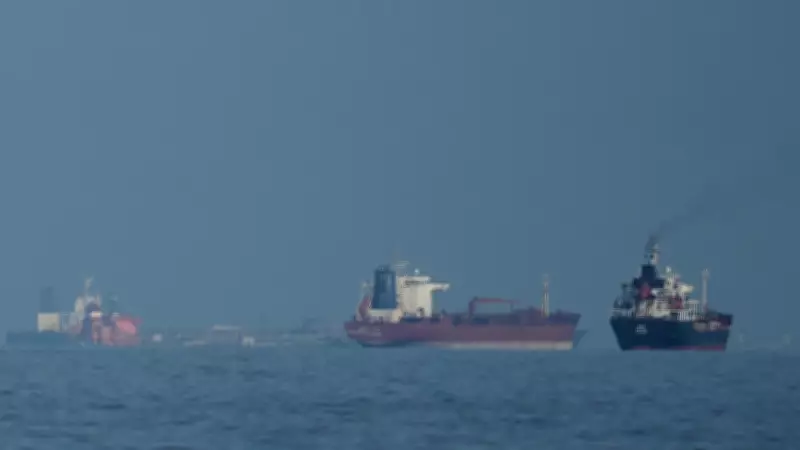
While vessels not destined for Iranian ports may theoretically continue passing through the strategic waterway, the proposed blockade threatens to severely constrict one of the world's most vital energy arteries. The Strait of Hormuz serves as a transit point for approximately one-fifth of global oil consumption and one-third of liquefied natural gas shipments.
Former President Trump remained defiant in his stance, expressing confidence that Iran would eventually capitulate to American demands. "I predict they come back and they give us everything we want," Trump declared, adding that Tehran "has no cards" in this geopolitical confrontation. The former president further warned of potential military action should Iran resist the proposed blockade measures.
Iran's Firm Rejection and Counter-Warning
Iranian leadership has categorically rejected both the threats and the underlying pressure campaign. Parliament Speaker Ghalibaf asserted that such intimidation tactics would have "no effect" on Iranian policy and issued a clear warning to Washington against further escalation.
"If you fight, we will fight, and if you come forward with logic, we will deal with logic," Ghalibaf stated, framing Iran's position as one of proportional response rather than unilateral concession.
Global Implications of Strait of Hormuz Disruption
The strategic importance of the Strait of Hormuz cannot be overstated in global energy markets. Any significant disruption—particularly a sustained naval blockade—could trigger severe consequences:

- Fuel Price Acceleration: The mathematical model suggests prices wouldn't just rise but could surge disproportionately, potentially making current high prices appear moderate by comparison
- Supply Chain Disruption: Global trade flows would experience immediate shocks affecting multiple industries beyond energy
- Inflationary Pressure: Worldwide inflation could intensify as transportation and production costs escalate across sectors
- Diplomatic Fragility: The failed talks revealed deep divisions regarding Iran's nuclear program and control of regional waterways, leaving diplomatic channels strained
The mathematical warning from Iran represents a novel approach to geopolitical communication, using quantitative analysis to illustrate the potential economic consequences of military escalation. As tensions continue to mount in this volatile region, the world watches closely how this unusual exchange between political rhetoric and mathematical modeling might influence future diplomatic and military decisions.





