

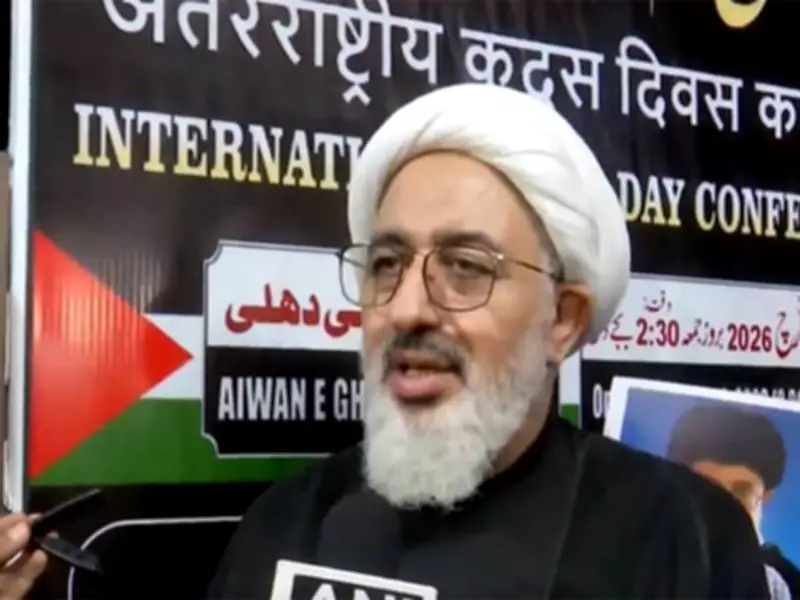
Iran's Envoy Praises 'Successful' Dialogue with Indian Leadership Amid Regional Tensions
Abdul Majid Hakeem Ilahi, the Representative of Iran's Supreme Leader in India, has declared that the recent conversation between Indian and Iranian leadership was "good and successful" as security concerns escalate in West Asia. In an exclusive interview with ANI, Ilahi underscored Iran's defensive position in the ongoing conflict, asserting that while Iran did not initiate hostilities, it is prepared to sacrifice everything for its dignity and land.
Iran's Stance on the West Asia Conflict
Ilahi provided a detailed account of the situation, stating, "Iran did not start this war. We were actively engaged in negotiations with the United States and pursuing diplomatic efforts, with both delegations pleased by the progress. However, it remains unclear what transpired, as the United States and the Zionist regime suddenly attacked Iran, targeting numerous civilians. We remain hopeful for victory and are committed to sacrificing all we have for our dignity and territory." This statement highlights Iran's perspective on the conflict, which has drawn international attention and concern.
Details of the India-Iran Leadership Conversation
When questioned about the dialogue between Indian and Iranian leaders, Ilahi expressed optimism, remarking, "This conversation was very good, successful, and I am confident it will yield significant achievements. We have relayed reports to Iran indicating that all Indian brothers and sisters, irrespective of religion, support Iran and justice, as India is a land of justice, wisdom, culture, and civilization. Indians are followers of Gandhi, who embodied justice. Based on our strong relationship and cooperation, I am sure we will deepen our ties and accomplish much together." This reflects the strengthening bilateral relations amid global uncertainties.

Recent Diplomatic Engagements Between India and Iran
This development follows a series of high-level discussions between Indian and Iranian officials. External Affairs Minister S. Jaishankar recently held another conversation with his Iranian counterpart, Seyed Abbas Araghchi, focusing on bilateral matters and BRICS-related issues. Jaishankar noted on social media, "Had another conversation with Iranian FM Seyed Abbas Araghchi yesterday night. Discussed bilateral matters as also BRICS related issues." This marks the fourth such exchange since the current round of conflict involving the US, Israel, and Iran began.
Earlier discussions between Jaishankar and Araghchi centered on critical regional concerns, including the safety of shipping and energy security. External Affairs Spokesperson Randhir Jaiswal elaborated, "EAM and FM of Iran have had three conversations in the last few days. The last one discussed issues pertaining to the safety of shipping and India's energy security. Beyond that, it would be premature for me to say anything." These talks underscore India's strategic interests in maintaining stable maritime routes and energy supplies.
Prime Minister Modi's Conversation with Iranian President
In a significant move, Prime Minister Narendra Modi spoke with Iranian President Masoud Pezeshkian to address the deteriorating security situation in the Gulf region. Modi expressed deep concern over the escalation of tensions, particularly the loss of civilian lives and damage to infrastructure. He stated, "Had a conversation with Iranian President, Dr. Masoud Pezeshkian, to discuss the serious situation in the region. Expressed deep concern over the escalation of tensions and the loss of civilian lives as well as damage to civilian infrastructure."
The Prime Minister also emphasized India's priorities, noting, "The safety and security of Indian nationals, along with the need for unhindered transit of goods and energy, remain India's top priorities." He reiterated India's commitment to peace and stability, urging for dialogue and diplomacy to resolve the crisis, saying, "Reiterated India's commitment to peace and stability and urged for dialogue and diplomacy."

International Concerns and Calls for De-escalation
Meanwhile, United Nations Secretary-General Antonio Guterres has voiced serious concerns about the escalating crisis in West Asia, warning that it poses a major threat to global peace and security. In a social media post, Guterres highlighted the immense suffering of civilians and called for immediate de-escalation and dialogue. He asserted, "De-escalation and dialogue are the only way out," urging all parties to cease hostilities, uphold international law, protect civilians, and return to negotiations promptly.
As tensions persist, the international community watches closely, with India playing a pivotal role in fostering diplomatic solutions. The ongoing conversations between Indian and Iranian leaders signal a concerted effort to navigate complex geopolitical challenges while strengthening bilateral cooperation for mutual benefit.





