

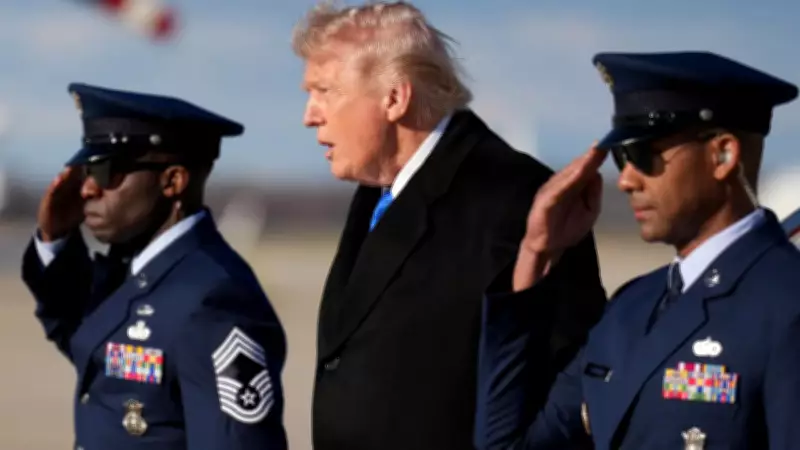
Iran's Strategic Resilience Creates a 'TACO' Moment for Trump in Middle East Conflict
President Trump's unilateral postponement of strikes on Iran's power infrastructure, following his ultimatum over the Strait of Hormuz, has sparked intense debate. Citing a "Good and Productive Conversation" that Iran denies, this move suggests Iranian resilience, counter-threats, and actions like the Dimona strike may have forced a TACO (Trump Always Chickens Out) moment. The question remains: is this a step toward de-escalation, or is Trump merely buying time for a larger offensive? Four weeks into the coordinated US-Israeli air campaign against Iran, a critical strategic lesson emerges for modern warfare observers: tactical air superiority cannot replace a viable political end-state.
Clash of Strategic Cultures and Miscalculations
Operations "Epic Fury" and "Rising Lion" have demonstrated the coalition's ability to inflict high-intensity damage, yet they have failed to trigger Tehran's systemic collapse. This conflict is not a conventional war but a clash of strategic cultures. Iran employs a "Mosaic Defence," leveraging geographic depth, terrain friction, and international economic interdependencies as durable deterrents. In contrast, the coalition relies on "Shock and Awe" through integrated multi-domain operations and technological dominance.
The US-Israeli campaign is built on a strategic miscalculation: the belief that overwhelming military force could incite domestic regime change. This maximalist approach, demanding "Unconditional Surrender" from a regional power, ignores historical lessons from Vietnam, Afghanistan, and Iraq, where destruction did not equate to sustainable peace.

Roots in JCPoA Withdrawal and Domestic Drivers
The confrontation traces back to the 2018 unilateral withdrawal from the Joint Comprehensive Plan of Action (JCPoA). By abandoning this multilateral framework, Washington created a strategic vacuum, expecting "Maximum Pressure" to yield a better deal on Iran's ballistic missiles and proxy networks. Without a credible diplomatic off-ramp, the progression from sanctions to strikes became inevitable and flawed. Diplomacy without force is weak, but force without a diplomatic goal is aimless.
Domestic motivations also play a role. The Trump and Netanyahu administrations have sought military "victories" to offset internal political challenges, such as Epstein files and tariff controversies in the US, and legal issues in Israel. They fell into the "Maduro Fallacy," assuming tactics from Venezuela could work in Iran, a country with four times Iraq's territory and deeper ideological infrastructure.
Intelligence Gaps and Iranian Operational Art
The justification for an "imminent threat" proved thin, with US officials previously indicating Iran posed no immediate ICBM threat to the mainland. This suggests strikes aim at broader strategic objectives: disrupting Chinese energy routes and preserving petrodollar dominance against Eurasian alternatives.
Iran's operational art avoids conventional engagements in favor of a decentralized, asymmetric model centered on Mosaic Defence. By decentralizing power to local commanders, Iran ensures continuity even if top leadership is eliminated. As conventional stocks dwindle, Iran may shift to "harassing fire" with sporadic drone and missile attacks to keep adversaries engaged at high cost.
Terrain Friction and Strategic Friction
Iran's most potent deterrent is its ability to shut the Strait of Hormuz, threatening 20% of global oil supply and imposing a "Global Inflationary Tax." This hybrid warfare tactic confronts not just the US Navy but the US economy, feeding volatility into energy prices and shipping insurance, increasing pressure on Trump through inflation he promised to control.
The coalition's reliance on standoff airpower faces diminishing returns. While nuclear sites and IRGC bases have been targeted, breaking Iran's national will remains elusive. Collateral damage, such as schoolgirl deaths in Minab and destruction of the South Pars Gas Field, has unified Iranians around national sovereignty, eclipsing internal dissent.

Resilient Leadership and Geopolitical Realignment
Despite severe degradation, Iran's tactical defiance persists, evidenced by shooting down an F-35 and missile strikes reaching Diego Garcia. As long as "missile cities" in mountain tunnels remain, Iran cannot be "obliterated" by airpower alone; a costly ground invasion would be required, which neither Washington nor Tel Aviv is prepared to pursue.
New Supreme Leader Mustafa Khamenei, having lost family in strikes, embodies a hardened "revenge doctrine," reinforcing regime survival. Geopolitically, the conflict accelerates a shift toward multipolarity, with Moscow, Beijing, and Tehran coordinating strategically. Rising oil prices benefit Russia, while China watches the US deplete resources in the Middle East, weakening its Indo-Pacific power projection.
India's Strategic Calculations and Emerging Scenarios
India faces direct threats due to its energy dependence on the Persian Gulf. Disruptions at Hormuz could impact budget deficits and domestic prices, highlighting the need for diversification. With over nine million Indians in the Gulf, protecting diaspora remittances is crucial. Strategic autonomy is tested as projects like the International North-South Transport Corridor and Chabahar Port face uncertainty, though India's diplomatic strategy has navigated the crisis better than many.
Two likely scenarios emerge: a "Declared Victory" exit where Trump claims mission accomplished and seeks talks, leaving a hardened Iran; or an extended regional conflict with limited ground actions, escalating tit-for-tat strikes and pushing oil prices above $140 per barrel, with catastrophic global economic effects.
Conclusion: Strategic Lessons for Modern Warfare
The Iran-Trump conflict exposes a hard reality: technological dominance cannot substitute for clear political objectives. While the US and Israel can destroy targets at will, unrealistic aims like Iranian surrender or dictating regime change remain unattainable. Iran demonstrates that asymmetric superiority alone cannot capitulate a determined nation, using geographic leverage like the Strait of Hormuz effectively. For India, this underscores the need to plan contingencies for chokepoints like the Malacca Strait. The crucial lesson is that military force must serve a viable political end-state; without an exit strategy or diplomatic objective, tactical wins may lead to strategic losses in regional dominance and big-power contestation.





