

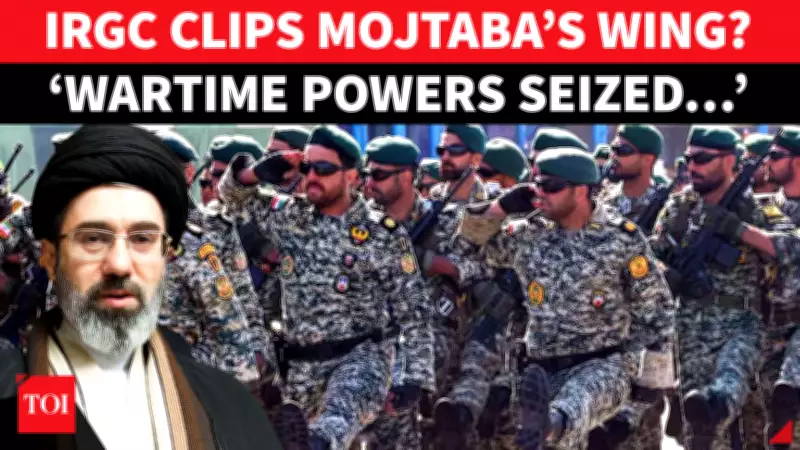
A new report has dropped a bombshell regarding Iran's power structure amid a fragile ceasefire with the United States and Israel. The question of who is truly ruling Iran has taken center stage, with indications that Mojtaba Khamenei, despite being elevated as the new Supreme Leader, may be largely a figurehead while real power rests with the Islamic Revolutionary Guard Corps (IRGC).
Dramatic Shift After Assassination
According to reports, Iran's power dynamics underwent a dramatic change following the assassination of Ayatollah Ali Khamenei on the first day of the war with the United States and Israel. For the first time since the 1979 Islamic Revolution, the country appears to lack a single, undisputed authority at the top. At the center of this shift is Mojtaba Khamenei, who has been elevated as Iran’s new Supreme Leader. However, multiple reports suggest his role is largely symbolic—serving to legitimize decisions rather than direct them.
Mojtaba's Absence and IRGC Dominance
Allegedly injured in the initial strikes that killed his father, Mojtaba has not appeared publicly. Real power, insiders indicate, has consolidated within a tight inner circle dominated by the IRGC. Senior figures such as Ahmad Vahidi are believed to be playing a central role in shaping both military strategy and political decision-making. Meanwhile, officials like Abbas Araghchi and Mohammad Bagher Ghalibaf have emerged as the public diplomatic faces of the regime.

This power shift raises critical questions about Iran's future direction, especially as it navigates a fragile ceasefire. The IRGC's increasing influence suggests that military considerations may outweigh diplomatic efforts, potentially impacting regional stability. As the situation evolves, the world watches to see whether Mojtaba Khamenei will eventually assert his authority or remain a symbolic figurehead.






