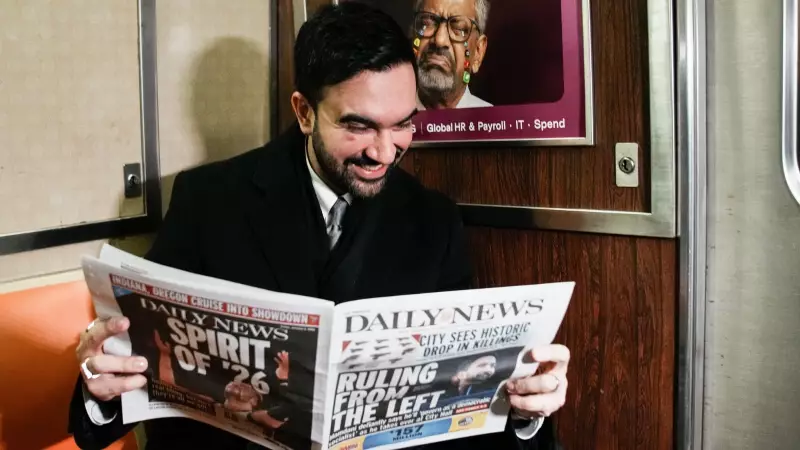
Israel's Permanent Representative to the United Nations, Gilad Erdan, has launched a sharp critique against prominent Ugandan academic Mahmood Mamdani. The diplomatic rebuke comes in response to Mamdani's recent decision to revoke several key executive orders that were originally issued by former New York City Mayor Eric Adams. This unusual international incident bridges municipal governance and global diplomacy, creating a fresh point of contention.
The Core of the Controversy: Revoking Adams' Directives
The dispute centres on actions taken by Mahmood Mamdani, a respected scholar and director at Columbia University's Makerere Institute. Mamdani moved to nullify a series of executive orders signed by Eric Adams during his tenure as Mayor of New York City. While the specific content of these revoked orders has not been detailed in public reports, the act itself has drawn the ire of the Israeli diplomatic mission.
Ambassador Gilad Erdan publicly condemned Mamdani's move, framing it as a concerning overreach. Erdan's criticism suggests that the revoked orders may have held significance for Israeli interests or touched upon broader principles of governance and international relations that Israel views as important. The Israeli envoy's statement implies that Mamdani's intervention in the administrative legacy of a major U.S. city's mayor is both inappropriate and politically motivated.

Diplomatic Repercussions and Scholarly Pushback
Erdan's criticism elevates a domestic administrative matter to the level of international discourse. By involving the United Nations platform, Israel is signalling that it perceives Mamdani's actions as part of a larger pattern of criticism against Israel, often linking such actions to the ongoing discourse around the Israeli-Palestinian conflict. The ambassador likely aims to discredit Mamdani's authority on the global stage by challenging his recent administrative decisions.
For his part, Mahmood Mamdani is a figure known for his critical perspectives on colonialism and human rights. His scholarly work often engages with themes of political power and accountability. The decision to revoke Eric Adams' orders likely stems from a specific policy disagreement or a principle Mamdani felt was compromised. This incident highlights how scholars and public intellectuals can sometimes find themselves at the centre of geopolitical storms, their academic or administrative choices scrutinised through a diplomatic lens.
Broader Implications for Governance and International Relations
This episode raises several important questions about the intersection of local governance, academic authority, and international politics. Firstly, it underscores how domestic policy decisions in one country can unexpectedly become flashpoints in foreign relations. The executive orders of a New York mayor, typically of local concern, have triggered an official response from a nation thousands of miles away.
Secondly, the situation demonstrates the growing trend of states using diplomatic channels to counter perceived criticism from non-state actors like scholars and academics. Israel's direct criticism of Mamdani is a tactic to publicly challenge narratives and actions it deems hostile. Finally, it places Eric Adams' policy legacy under an international spotlight, with his mayoral decisions now part of a transcontinental debate involving Israel, Uganda, and the United States.
The fallout from this incident is still unfolding. It remains to be seen whether Mamdani will respond directly to Erdan's accusations or if the revocation of the orders will be reversed. Furthermore, the content of the specific executive orders at the heart of the dispute could become public, potentially clarifying the reasons behind both Mamdani's action and Israel's strong reaction. This story serves as a potent reminder that in our interconnected world, the lines between local administration and global diplomacy are increasingly blurred.