

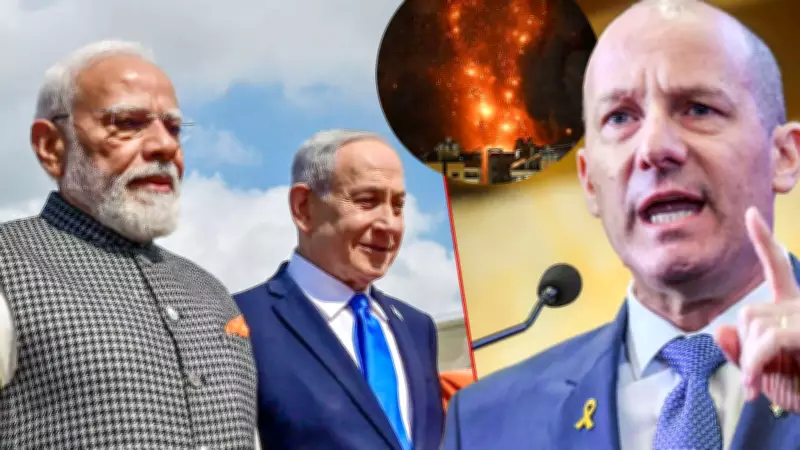
Israel Envoy Reuven Azar Denies Link Between PM Modi's Visit and Iran Strike Timing
Amid escalating tensions across West Asia, Israel's Ambassador to India, Reuven Azar, has categorically dismissed speculation that Prime Minister Narendra Modi's recent visit to Israel was connected to the timing of military strikes against Iran. The envoy provided a detailed timeline to clarify the sequence of events.
Official Clarification on Operational Timing
According to Ambassador Azar, the decision to authorize the strike operation was made by Israel's security cabinet nearly two days after Prime Minister Modi had completed his diplomatic visit and departed the country. The envoy emphasized that the operation was approved only once a specific operational window became available, following standard military protocols.
"There was absolutely no plan for any military action during Prime Minister Modi's meetings in Israel," Azar stated definitively. "The strike, which was conducted in coordination with the United States, was based purely on strategic and security considerations that emerged after his visit had concluded."

Geopolitical Context and Regional Tensions
The clarification comes at a time when tensions in the region remain critically high, with global attention firmly fixed on the evolving geopolitical dynamics. The military action, carried out jointly by Israeli and American forces, has intensified scrutiny on diplomatic movements and military timing in West Asia.
Ambassador Azar's statement serves to separate diplomatic engagements from military operations, reinforcing that Israel's security decisions are made independently based on tactical assessments rather than diplomatic calendars. This distinction is particularly significant given the delicate balance of power in the region and the involvement of multiple international stakeholders.
Strategic Considerations Over Diplomatic Timing
The envoy's detailed explanation underscores several key points:
- The security cabinet's approval came approximately 48 hours after PM Modi's departure
- Operational timing was determined by military readiness and intelligence assessments
- No connection existed between diplomatic visits and military planning
- Coordination with the United States followed established bilateral defense protocols
As regional tensions continue to simmer, this clarification aims to prevent misinterpretation of diplomatic engagements while maintaining transparency about military decision-making processes. The situation in West Asia remains fluid, with international observers closely monitoring developments and their implications for global stability.






