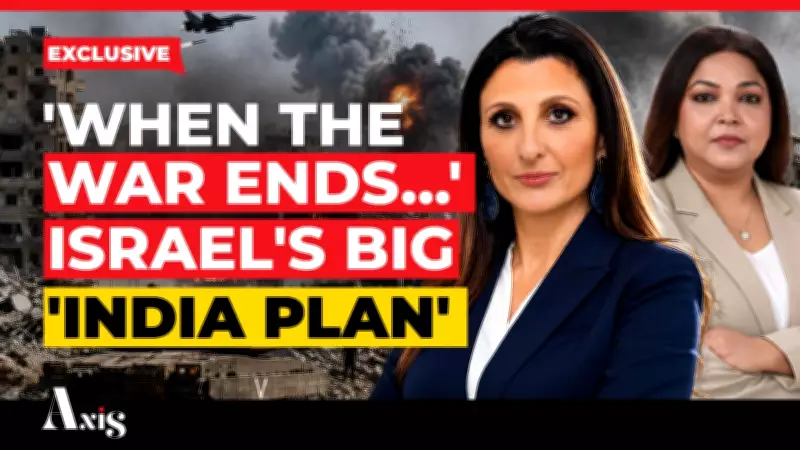
Israel has dropped a major geopolitical hint regarding its strategic plans in the region. In an exclusive interview with Aditi Prasad of Times Axis, Israel Foreign Ministry Special Envoy Fleur Hassan-Nahoum revealed that once the Iran war concludes, efforts could begin to revive the I2U2 alliance involving India, Israel, the United Arab Emirates, and the United States.
Reviving the I2U2 Alliance
The primary goal of this revived alliance is to build new trade corridors, strengthen cooperation in artificial intelligence and defence, and bypass risky chokepoints such as the Strait of Hormuz. Fleur openly admitted that projects like the India-Middle East-Europe Corridor (IMEC) and I2U2 were disrupted after the October 7 attacks and the subsequent Gaza war. However, as China expands its influence in the Gulf and Iran threatens energy routes, the West Asian Quad may return stronger than ever.
Why India Is Central to This Strategy
India is seen as a future technology and trade powerhouse in the region. The alliance aims to leverage India's growing economic clout and technological capabilities to counterbalance China's expanding footprint. The cooperation will focus on enhancing digital infrastructure, defence collaboration, and creating alternative supply chains that reduce dependence on traditional chokepoints.

Geopolitical Implications
This development comes at a time when global supply chains are being reshaped by geopolitical tensions. The revival of I2U2 and IMEC is expected to provide a strategic alternative to China's Belt and Road Initiative, offering a more secure and efficient route for trade between Asia, the Middle East, and Europe. The move also signals a strengthening of ties between Israel and India, with both nations viewing each other as key partners in the region's future.
Fleur's comments underscore the urgency of forming new alliances in the face of growing threats from Iran and China. The full interview provides deeper insights into how these partnerships could reshape the geopolitical landscape of the Middle East and beyond.